Note: This article is a supplementary piece to the Pace and Analysis articles I publish on the individual races
Average Qualifying:
Teammate Head to Heads:
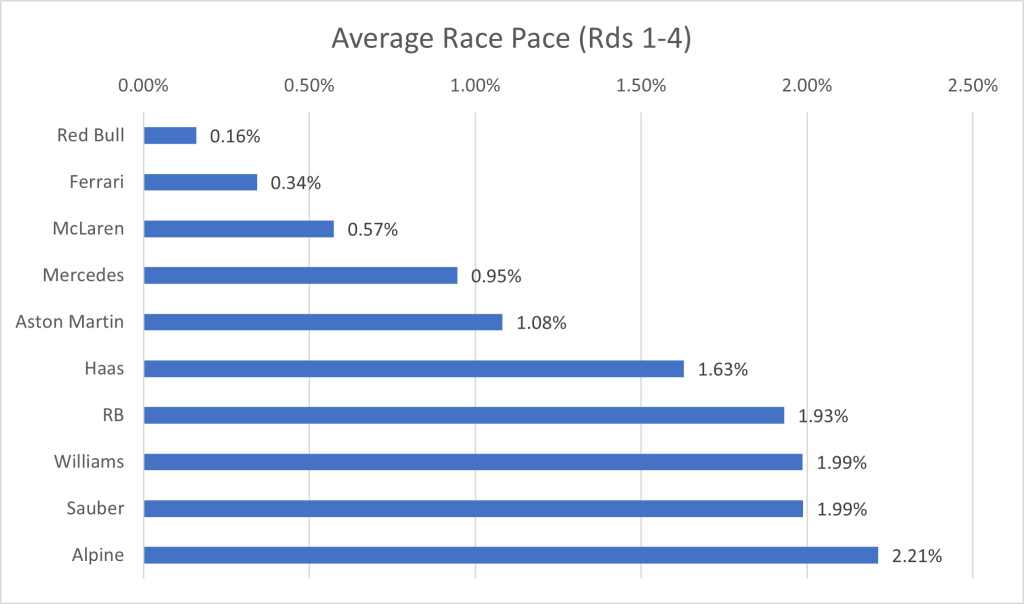
Average Race Pace:
Note: This article is a supplementary piece to the Pace and Analysis articles I publish on the individual races
Average Qualifying:
Teammate Head to Heads:
Average Race Pace:
This article is part of a series of articles I will be completing throughout the year, where I am going to analyze the average pace of the drivers and teams, in both qualifying and the races, to be able to gain a picture of performance levels.
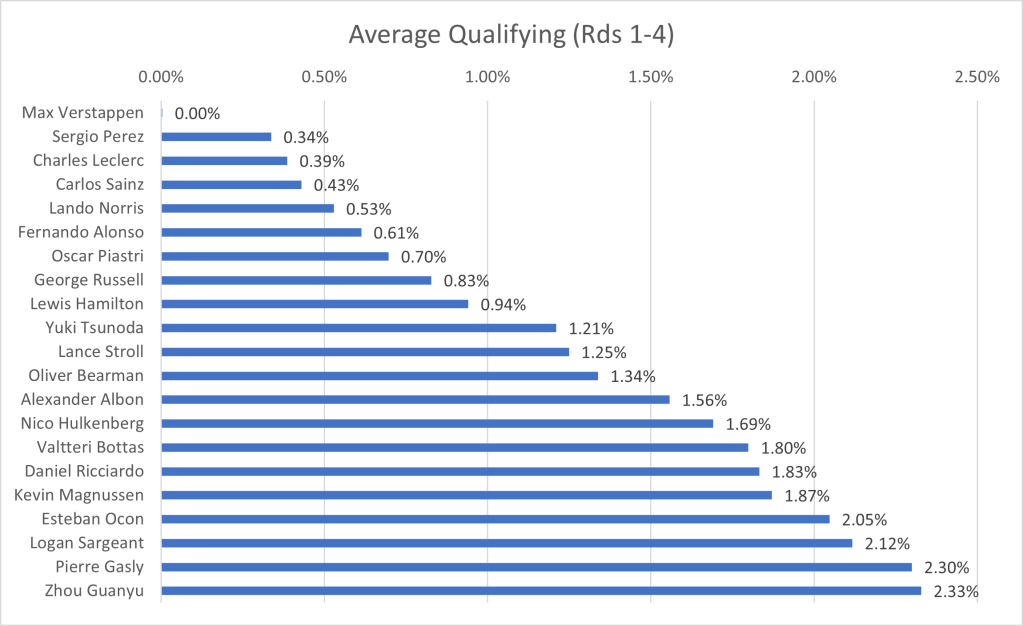
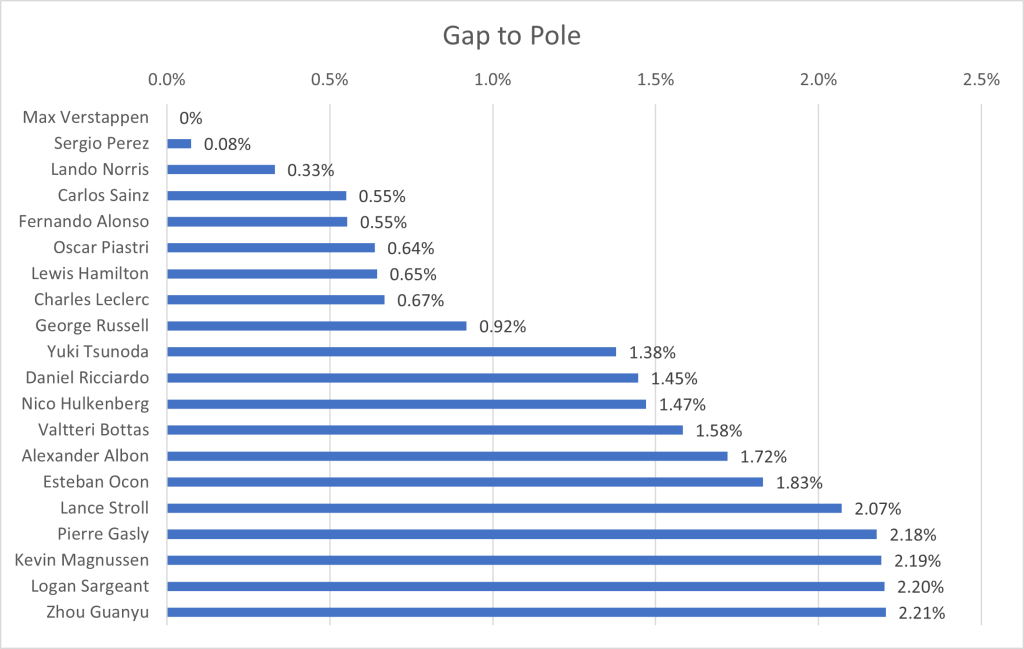
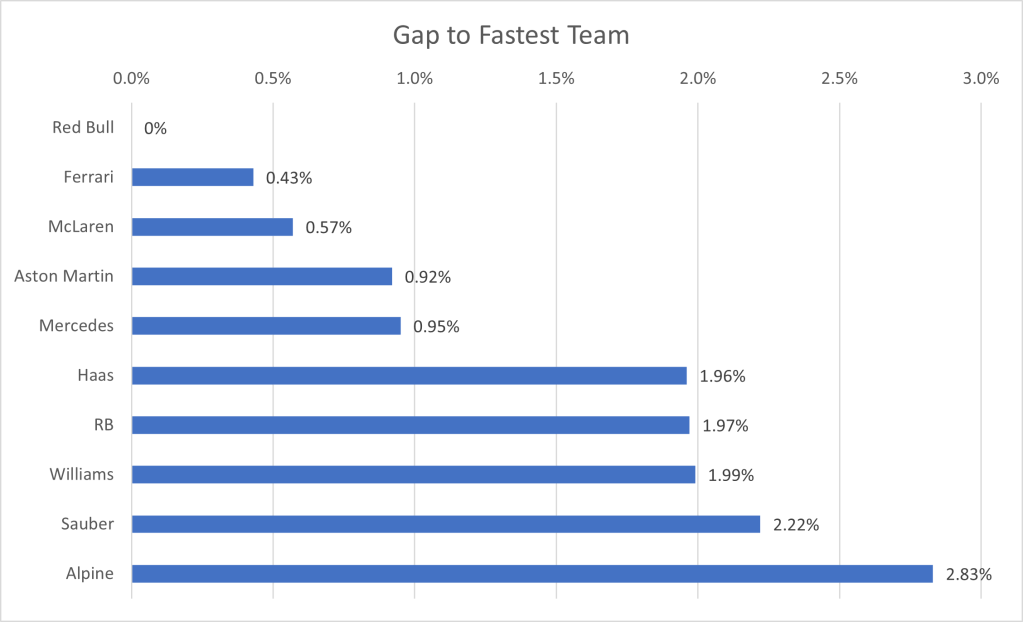
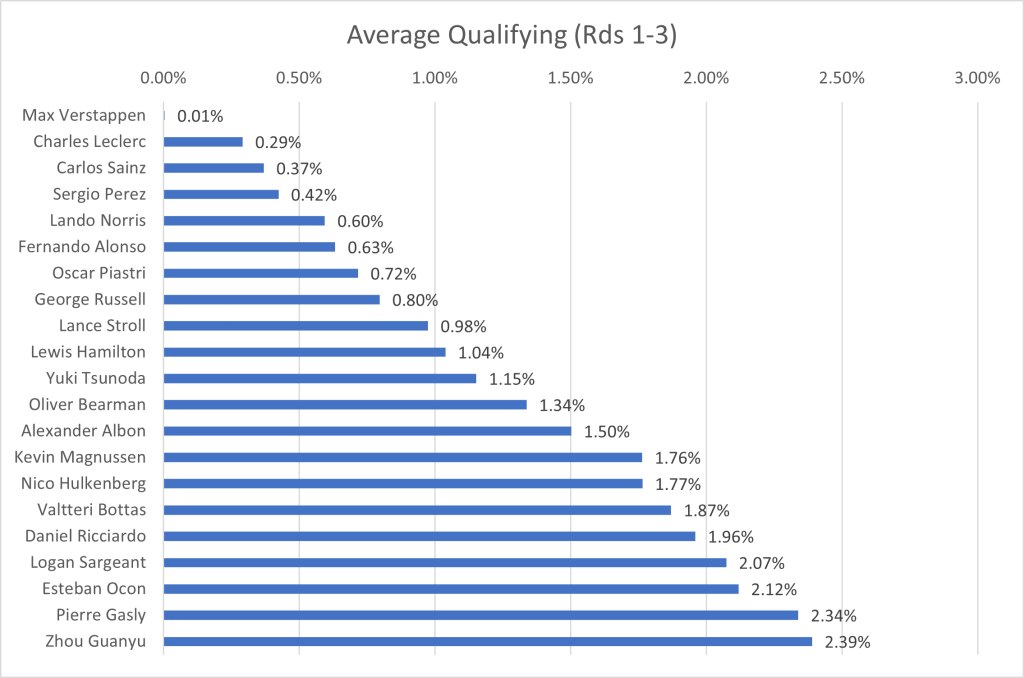
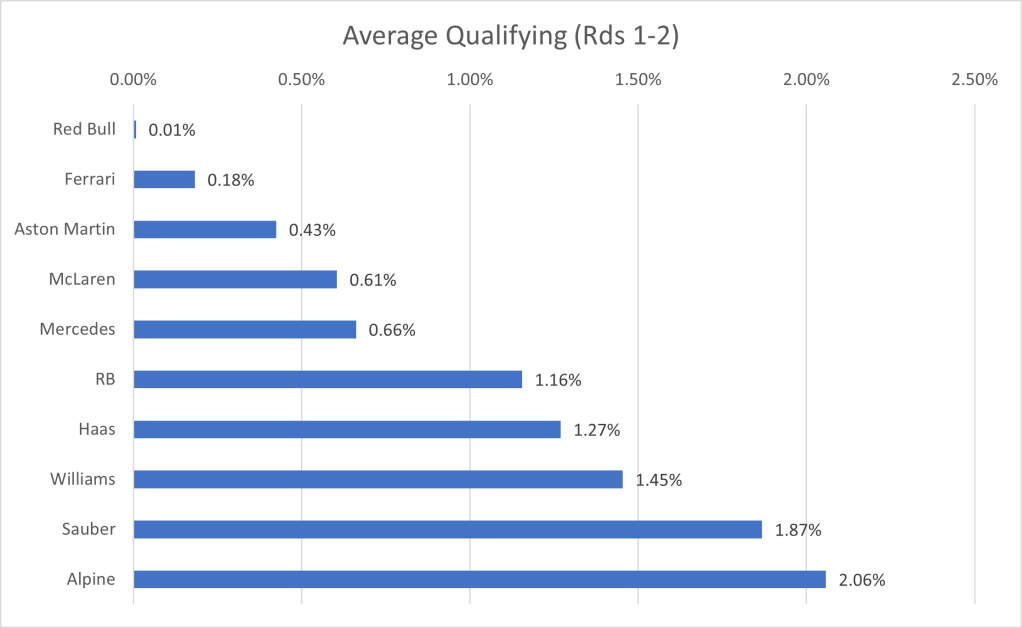
I have collated the fastest laps by each driver in qualifying, to show the average gap to the fastest driver. One caveat that arises, is that the top 10 drivers, through progressing to the final qualifying session, have a better track condition that those who only took part in Q1 or Q2. Due to this, the gap will be larger for the drivers outside the top ten than if qualifying was performed in one representative session. However, since the final session represents the point at which the top drivers are truly pushing, I’ve ruled it a better grounding point for the true limit of the cars, rather than only focusing on the first qualifying session in which the best times are not recorded.
Qualifying Pace-
With no further ado, here are the gaps to pole:

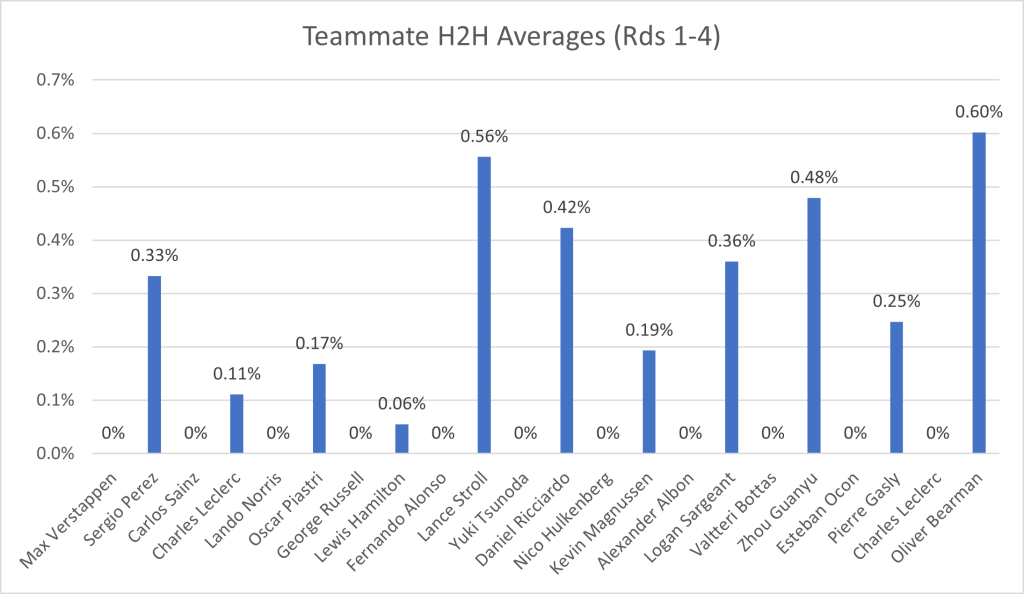
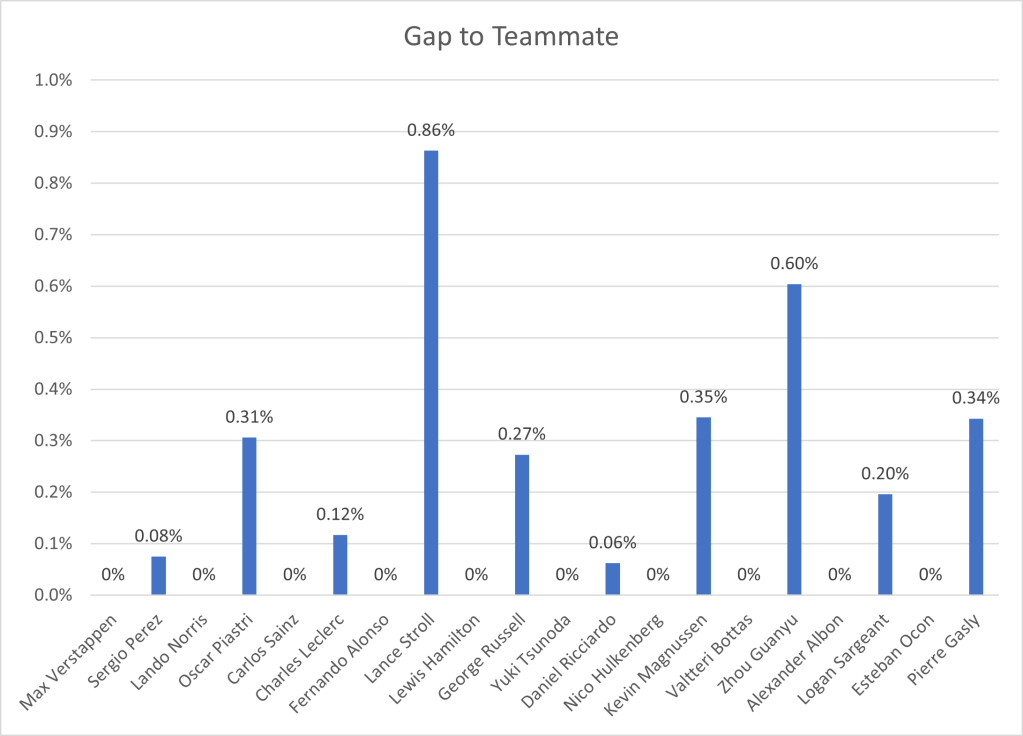
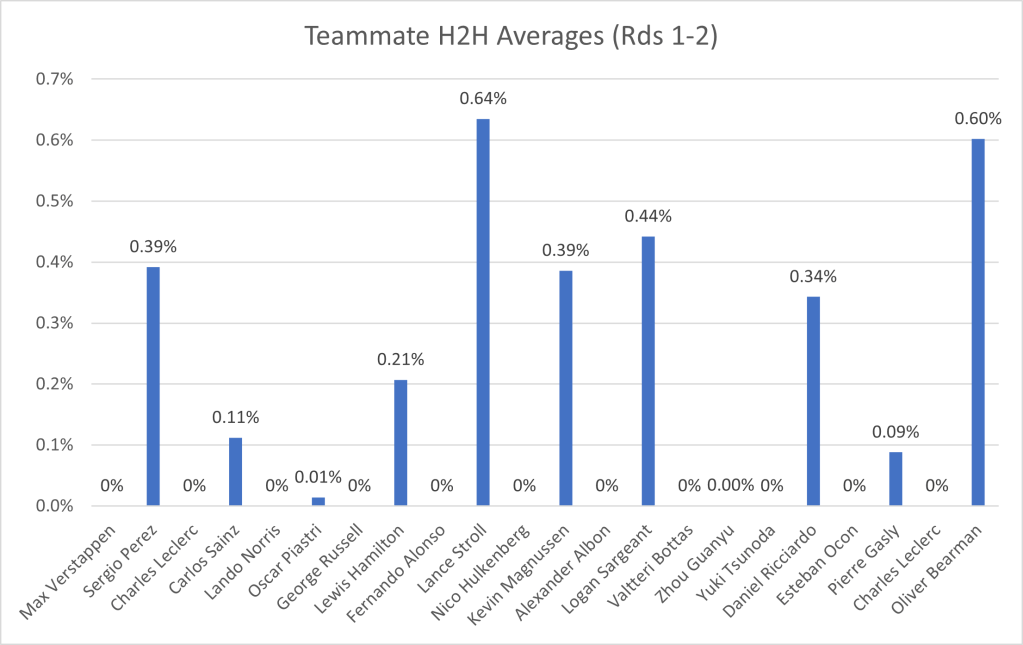
Additionally, I have collected the data for the gaps between teammates. I did this by using their fastest lap times set in the same session, so if one driver got into Q3, whilst the other only got into Q2, then I would count their Q2 times. Additionally, the lap times have to be representative, to avoid comparing out laps completed before a driver breaks down, as this would give us a very inaccurate representation of the drivers’ pace:
Race Pace-
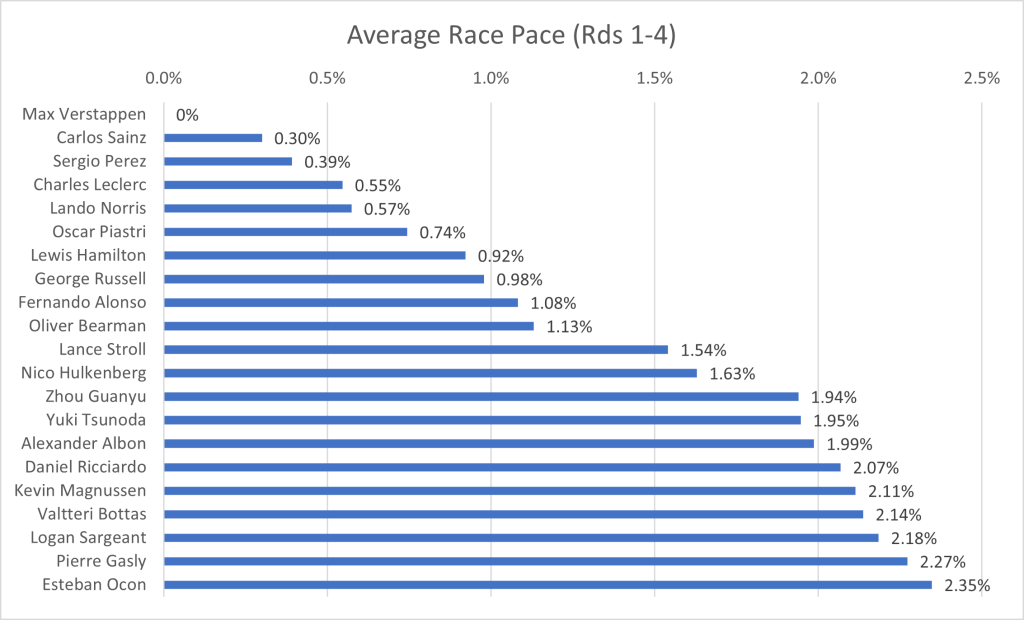
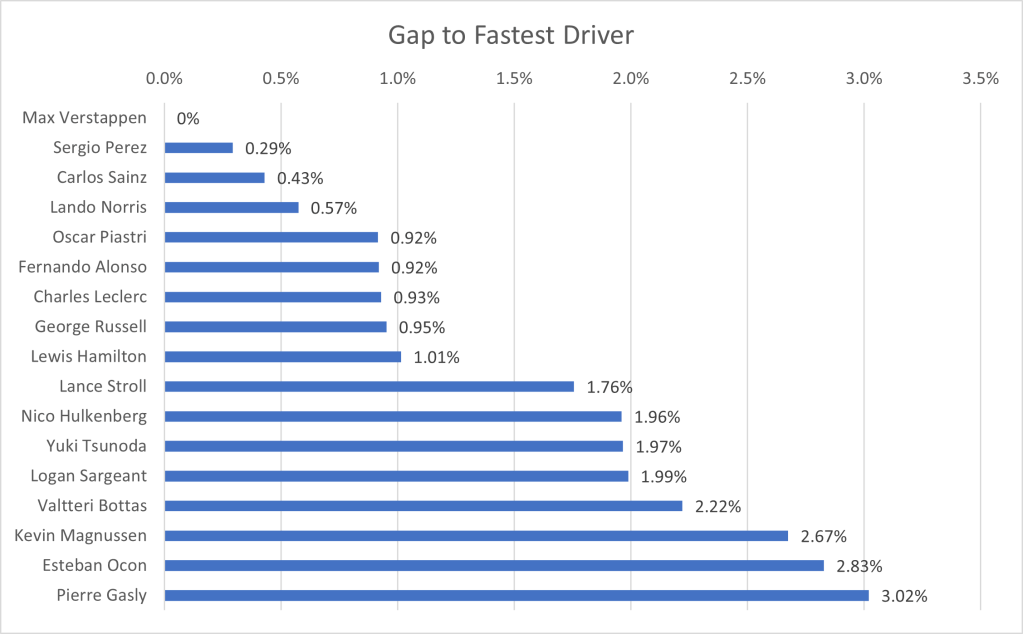
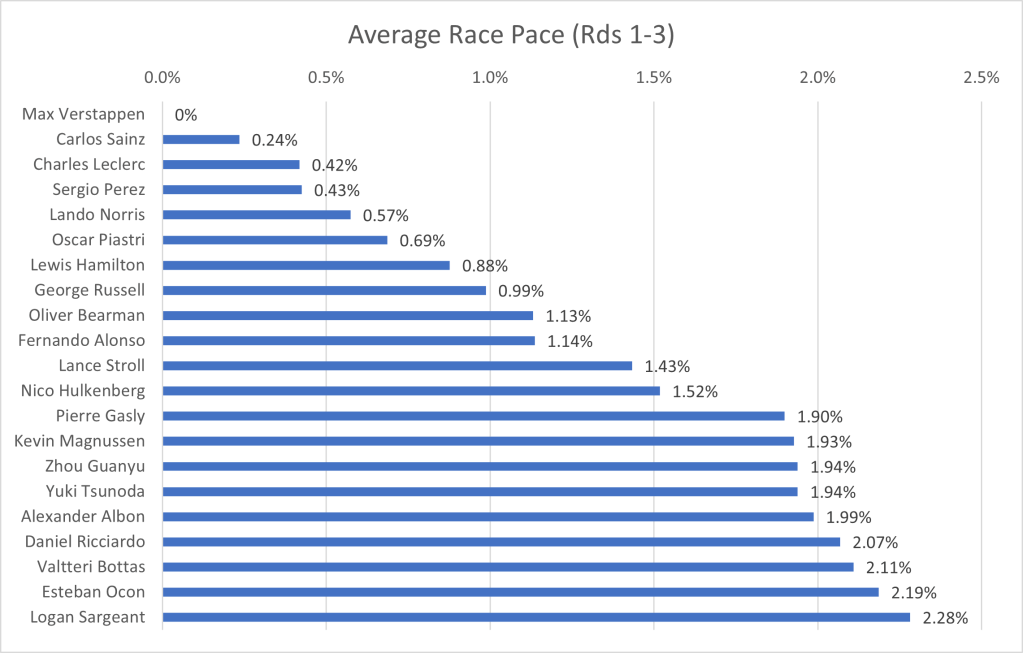
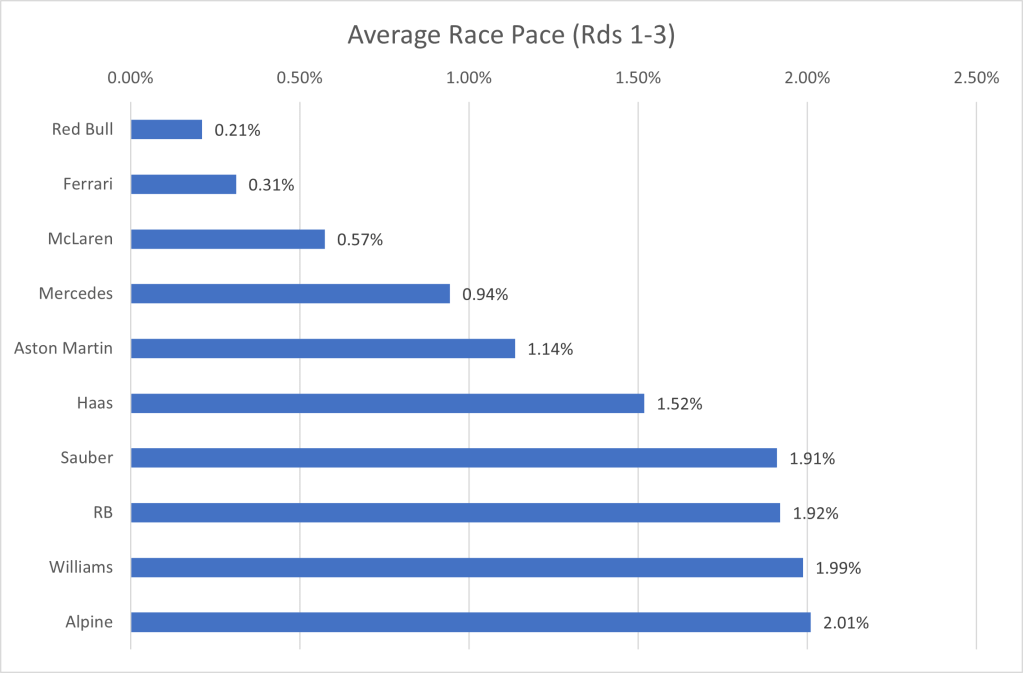
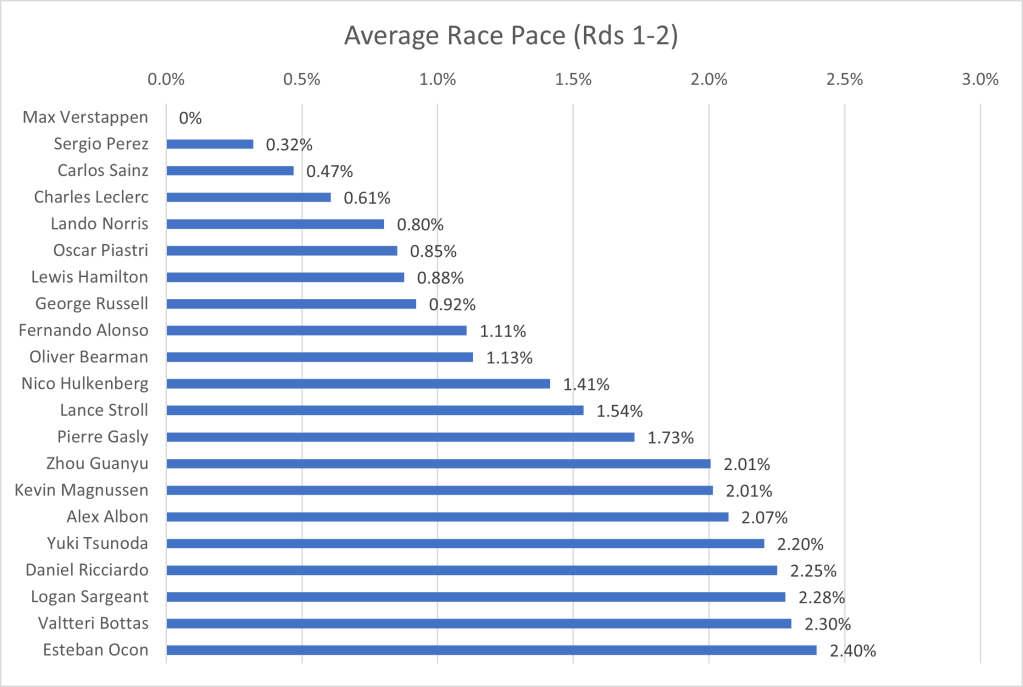
Next up in our data sets is the race pace of the drivers. I have calculated the average pace of the drivers, removing first laps, in-laps, out-laps and virtual safety car laps, as all these all not representative of a driver’s general pace. Additionally, if a driver has a spin, or another error that would greatly reduce their lap time, I have not counted these laps, as they would also not be representative of a drivers’ general pace. I have only included drivers that completed at least 75% of the race distance ((which for Japan, excludes Alexander Albon, Daniel Ricciardo and Zhou Guanyu) so to not skew the season long averages against drivers that did not drive on low fuel with the best track conditions.
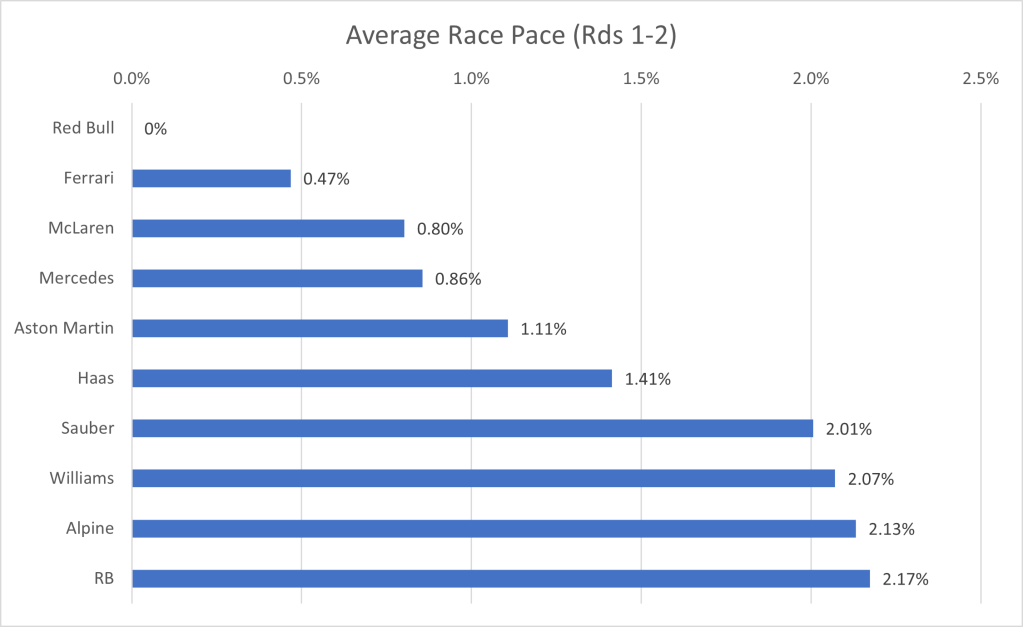
As different drivers have a varying number of race stints, this skews the overall pace. Generally, if a driver makes more stops, their pace will be faster on average. This will be taken into account in my final thoughts and analysis. Additionally, the average pace per stint and number of stints are recorded at the bottom of this article, for those interested in viewing more precise estimates of pace relative to other drivers on the same stint.[2]
Analysis:
Further Resources-
Qualifying Pace:
| Driver | Fastest Qualifying Time |
| Max Verstappen | 88.197 (0%) |
| Sergio Perez | 88.263 (+0.075%) |
| Lando Norris | 88.489 (+0.331%) |
| Carlos Sainz | 88.682 (+0.550%) |
| Fernando Alonso | 88.686 (+0.554%) |
| Oscar Piastri | 88.76 (+0.638%) |
| Lewis Hamilton | 88.766 (+0.645%) |
| Charles Leclerc | 88.786 (+0.668%) |
| George Russell | 89.008 (+0.920%) |
| Yuki Tsunoda | 89.413 (+1.379%) |
| Daniel Ricciardo | 89.472 (+1.446%) |
| Nico Hulkenberg | 89.494 (+1.471%) |
| Valtteri Bottas | 89.593 (+1.583%) |
| Alexander Albon | 89.714 (+1.720%) |
| Esteban Ocon | 89.811 (+1.830%) |
| Lance Stroll | 90.024 (+2.071%) |
| Pierre Gasly | 90.119 (+2.179%) |
| Kevin Magnussen | 90.131 (+2.193%) |
| Logan Sargeant | 90.139 (+2.202%) |
| Zhou Guanyu | 90.143 (+2.206%) |
Average Race Pace:
| Driver | Pace |
| Max Verstappen | 96.028 (0%) |
| Sergio Perez | 96.309 (+0.293%) |
| Carlos Sainz | 96.441 (+0.430%) |
| Lando Norris | 96.579 (+0.574%) |
| Oscar Piastri | 96.908 (+0.916%) |
| Fernando Alonso | 96.91 (+0.919%) |
| Charles Leclerc | 96.921 (+0.929%) |
| George Russell | 96.943 (+0.952%) |
| Lewis Hamilton | 97.002 (+1.014%) |
| Lance Stroll | 97.715 (+1.756%) |
| Nico Hulkenberg | 97.91 (+1.960%) |
| Yuki Tsunoda | 97.916 (+1.966%) |
| Logan Sargeant | 97.937 (+1.988%) |
| Valtteri Bottas | 98.161 (+2.221%) |
| Kevin Magnussen | 98.596 (+2.674%) |
| Esteban Ocon | 98.743 (+2.827%) |
| Pierre Gasly | 98.928 (+3.020%) |
All Stints:
| Best Stints | Pace |
| Sainz 3rd (16L/NH) | 94.726 |
| Verstappen 3rd (18L/NH) | 94.727 |
| Hamilton 3rd (13L/UM) | 94.822 |
| Perez 3rd (19L/NH) | 94.92 |
| Russell 3rd (15L/UM) | 95.206 |
| Sargeant 4th (10L/NS) | 95.671 |
| Alonso 3rd (19L/NH) | 95.779 |
| Piastri 3rd (20L/NH) | 95.798 |
| Leclerc 2nd (26L/NH) | 95.889 |
| Norris 3rd (26L/NH) | 95.941 |
| Sargeant 3rd (5L/NM) | 96.056 |
| Hulkenberg 2nd/3rd (18L/NH) | 96.185 |
| Hamilton 2nd (14L/NH) | 96.387 |
| Russell 2nd (13L/NH) | 96.475 |
| Verstappen 2nd (16L/NM) | 96.523 |
| Stroll 4th (17L/NS) | 96.644 |
| Sainz 2nd (19L/UM) | 97.036 |
| Perez 2nd (16L/NM) | 97.039 |
| Norris 2nd (13L/NH) | 97.298 |
| Verstappen 1st (12L/NM) | 97.321 |
| Tsunoda 2nd/3rd (29L/NH) | 97.346 |
| Alonso 2nd (18L/NM) | 97.401 |
| Piastri 2nd (18L/NH) | 97.506 |
| Stroll 3rd (10L/NH) | 97.591 |
| Ocon 3rd (18L/NM) | 97.416 |
| Norris 1st (7L/NM) | 97.614 |
| Perez 1st (11L/NM) | 97.648 |
| Gasly 3rd (19L/NH) | 97.682 |
| Sargeant 2nd (10L/NH) | 97.754 |
| Magnussen 2nd (29L/NH) | 97.827 |
| Bottas 2nd/3rd (29L/NH) | 97.829 |
| Sainz 1st (11L/NM) | 97.909 |
| Leclerc 1st (22L/NM) | 98.14 |
| Alonso 1st (9L/NS) | 98.318 |
| Piastri 1st (8L/NM) | 98.334 |
| Ocon 2nd (12L/NH) | 98.593 |
| Russell 1st (18L/NH) | 98.727 |
| Bottas 1st/2nd (14L/NH) | 98.749 |
| Stroll 2nd (8L/NM) | 98.849 |
| Gasly 2nd (14L/NM) | 98.877 |
| Tsunoda 1st/2nd (13L/NH) | 98.897 |
| Hamilton 1st (19L/NH) | 98.948 |
| Hulkenberg 1st/2nd (26L/NH) | 99.01 |
| Stroll 1st (8L/NS) | 99.012 |
| Sargeant 1st (18L/NH) | 99.82 |
| Magnussen 1st (18L/NM) | 99.836 |
| Ocon 1st (15L/NH) | 100.457 |
| Gasly 1st (12L/NH) | 100.961 |
Key: 1L= One Lap, 2L= Two Laps, NH= New Hards, UM= Used Mediums, NM= New Mediums, NS= New Softs
Number of Stints:
| Number of Stints | Drivers |
| 2 | Leclerc, Magnussen, Bottas*, Hulkenberg*, Tsunoda* |
| 3 | Verstappen, Perez, Sainz, Norris, Alonso, Russell, Piastri, Hamilton, Ocon, Gasly, Bottas*, Hulkenberg*, Tsunoda* |
| 4 | Stroll, Sargeant |
[1] I only count a stint if a driver has completed five or more laps, to avoid short stints for fastest lap attempts skewing the data on the table. This has led to the official first stints of Tsunoda, Bottas and Hulkenberg (who only recorded one valid lap in his first stint) not being included in the table, though this is represented through the labeling of their stints as 1st/2nd and 2nd/3rd
Sprint-
Pole Position: Max Verstappen
Bold Prediction: Both Haas cars in Q3
Once again, Max dominated. He drove away from the field and had a pace advantage over everyone else. There’s little else to say, his performance was next to perfect, as it is every weekend.
2. Sergio Perez-
Whilst his teammate still dominated, Sergio Perez also had a fantastic weekend. On a track he has struggled at in the past, he nearly matched Max in qualifying. Whilst missing his chances to pass Max at the start and win the race, Sergio still delivered fantastic pace and audacious overtakes to ensure that Red Bull achieved their third 1-2 of the season.
3. Carlos Sainz-
Carlos once again proved the stronger Ferrari driver over the weekend. He maximized his good starting position to continue his 100% podium rate this season.[1] People are already starting to question why Ferrari made the call to replace Carlos, he is clearly one of the best drivers in F1. After spending years being underrated, it appears that F1 fans, teams and casual spectators are waking up to this fact. Ferrari currently have the best line-up in F1, let’s hope they don’t lose it.
4. Charles Leclerc-
Whilst not having the best qualifying performance, Charles more than made up for it in the race. Charles and Ferrari executed a fantastic one-stop strategy that no other driver could make work. Charles’ ability to post consistent lap times with minimal degradation (even compared to his own teammate) show that he is maximizing that Ferrari in the races. Once he has improved his qualifying, Charles could be unstoppable this season.
5. Yuki Tsunoda-
Last, but definitely not least, is the home hero Yuki Tsunoda. He was able to beat his teammate in qualifying, run a sublime strategy in the race and finish in front of an Aston Martin to get the last point on the table. His attitude is amazing, he puts the team before himself and combined with Perez’s strong performances, he has guaranteed that Daniel Ricciardo will never drive a Red Bull again. Getting a point at home clearly meant so much to Yuki and as someone who remembers his first year, when he was consistently outqualified by Pierre Gasly and swore too much on the radio, it has been a pleasure to see Yuki grow into one of F1’s most solid performers.
Tally:[2]
[1] Bar when he was in hospital for appendicitis.
[2] Of how many times drivers have featured in these lists.
F1 delivered a thrilling Japanese Grand Prix. Often one of the best tracks for drivers, Suzuka has recently proved a difficult track to make overtakes. However, mixed up tyre strategies provided for battles throughout the field this year. Whilst the final result was predictable, the action was exciting, something that should please any fan of good racing.
Red Bull returned to dominate the field after their Australian hiccup. Whilst Verstappen’s win was expected, what surprised was how close Sergio Perez was throughout this weekend. Japan is one of Verstappen’s best tracks and Sergio had a relentless struggle here last season. I fully expected him to qualify in seventh and finish around fifth. Yet, Perez seems to have stepped up his game, only being 0.066 seconds slower than Verstappen in qualifying. He then proceeded to have an entertaining race, battling the rest of the field after his pit stops, to finish exactly where Red Bull need him to. Also, overtaking both Mercedes through 130R was inspired. Channeling his inner Alonso, Perez showed that he has the bravery to stop the second Red Bull seat going down under.
McLaren have had a slightly less fortunate week than the bulls. I fear I was not firm enough in the article I wrote on McLaren’s performance earlier in the year. Whilst the article I wrote back then expressed doubts and reservations on McLaren’s expectations of challenging Red Bull, I was actually certain that they would not be the second-best team this year. Thus, it was not to my surprise to see McLaren now claiming that it would now take another twelve months of development to improve, followed by the shock announcement that David Sanchez, who only started his job three months ago, was leaving.[1] Despite this, the grand prix itself was not even that bad for McLaren. They still look like they are solidly the third best team and can challenge for podiums in the right circumstances. But the team set expectations too high at the beginning of the year, disappointing their drivers and exemplifying the amusement of Ferrari fans. If McLaren had set realistic expectations, people would be singing their plaudits for seemingly dethroning Mercedes as a top team. Instead, we’re all busy wondering what happened to the Red Bull challenger we were promised.
This week’s stewards thankfully proved to be more competent than the ones in Australia. Towards the end of the race, Fernando was delivering another defensive masterclass, driving slowly to keep Piastri in DRS to stop George Russell from being able to advance and overtake on his faster tyres. No twenty second penalty was given to Fernando for driving slowly this week, but when Russell and Piastri had a moment at the chicane, I was nervous that one of them would get an unnecessary penalty. This was because the divebomb Russell made to attempt to overtake Piastri led to Piastri going off the track to avoid a collision. I was initially hesitant that Piastri may get a penalty for leaving the track, when his space was incredibly limited, but then Russell was put under investigation for pushing Piastri off the track. This was even though Piastri benefited from not taking the chicane. But the stewards took the right decision this week, to not punish hard racing. After Australia’s debacle, I was pleased to see the attitude of ‘let them race’ being adopted. I hope future stewards can learn from the fair handling of this incident.
Overall, a good weekend for F1. Suzuka reminded us why it was one of the greatest tracks in F1 history, moves were made across the field, Tsunoda got some points at home and Alpine dropped back like a stone. I couldn’t really have asked for much more.[2]
[1] McLaren will need “another 12 months” to fix F1 weaknesses, Fillip Cleeren, Autosport (1 April 2024) https://www.autosport.com/f1/news/mclaren-will-need-another-12-months-to-fix-f1-weaknesses/10593701/; McLaren’s Big Ex-Ferrari F1 Hire Out After Three Months, Josh Suttill, The Race (2 April 2024) https://www.the-race.com/formula-1/mclaren-reshuffle-ex-ferrari-f1-hire-david-sanchez-out-after-three-months/
[2] For my thoughts on Ferrari’s race, see my forthcoming article on the five star drivers.
Note: This article is a supplementary piece to the Pace and Analysis articles I publish on the individual races
Average Qualifying:
Teammate Head to Heads:
Average Race Pace:
This article is part of a series of articles I will be completing throughout the year, where I am going to analyze the average pace of the drivers and teams, in both qualifying and the races, to be able to gain a picture of performance levels.
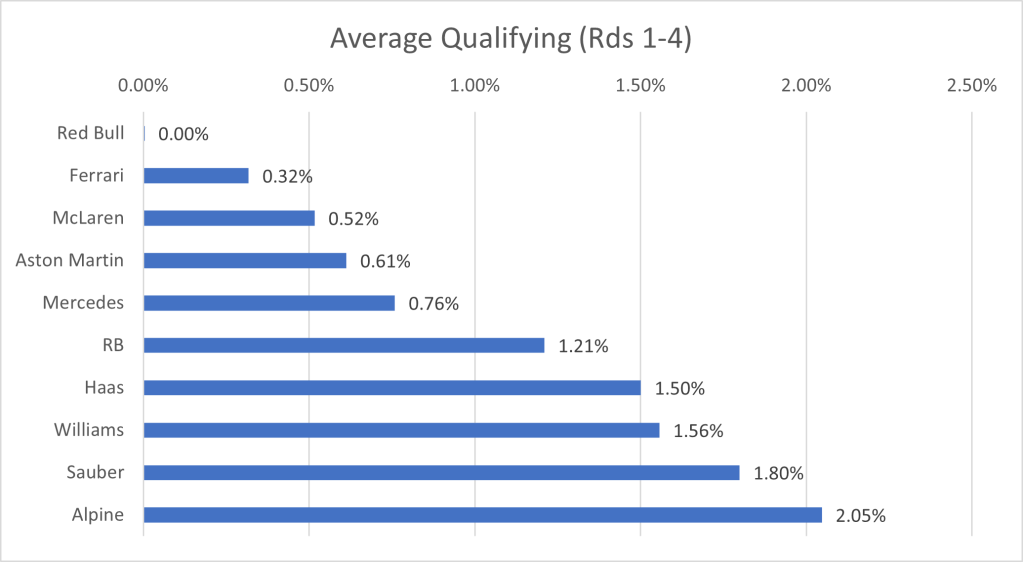
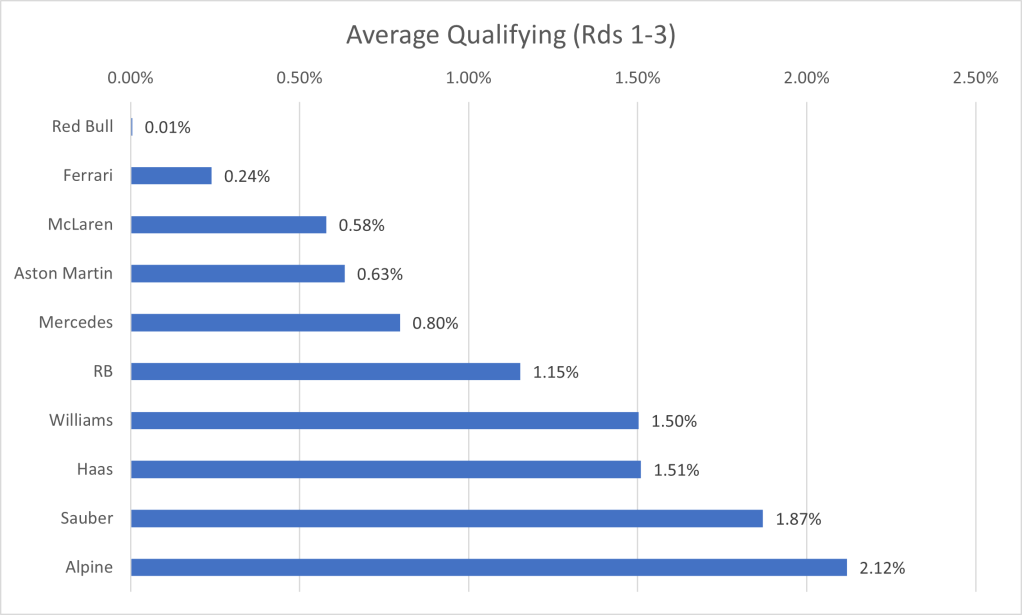
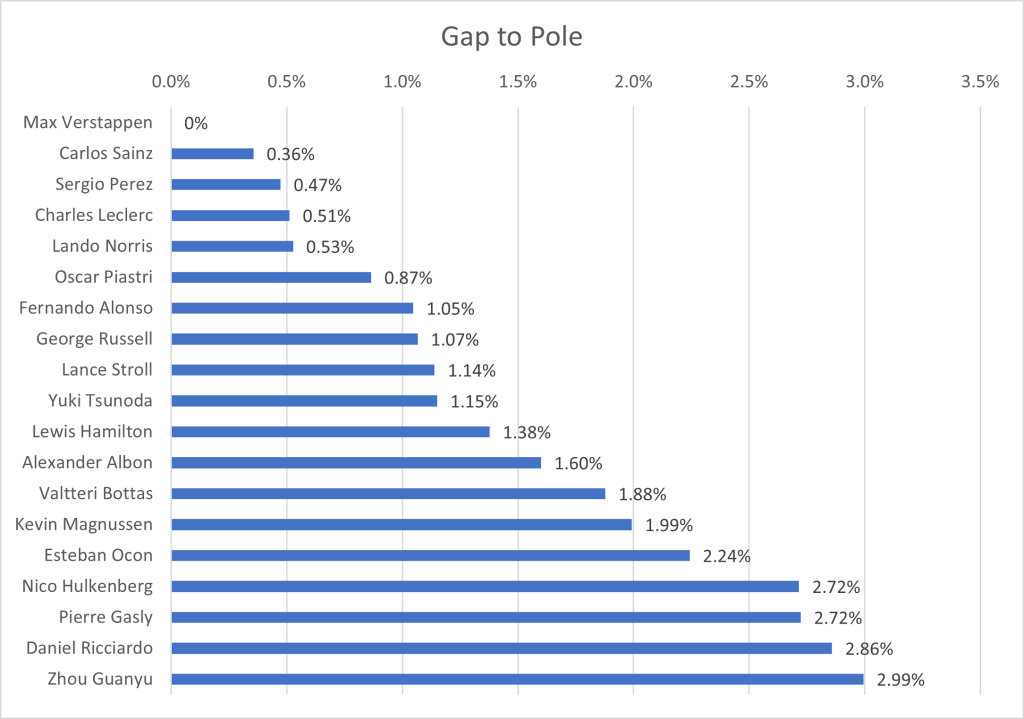
I have collated the fastest laps by each driver in qualifying, to show the average gap to the fastest driver. One caveat that arises, is that the top 10 drivers, through progressing to the final qualifying session, have a better track condition that those who only took part in Q1 or Q2. Due to this, the gap will be larger for the drivers outside the top ten than if qualifying was performed in one representative session. However, since the final session represents the point at which the top drivers are truly pushing, I’ve ruled it a better grounding point for the true limit of the cars, rather than only focusing on the first qualifying session in which the best times are not recorded.
Qualifying Pace-
With no further ado, here are the gaps to pole:
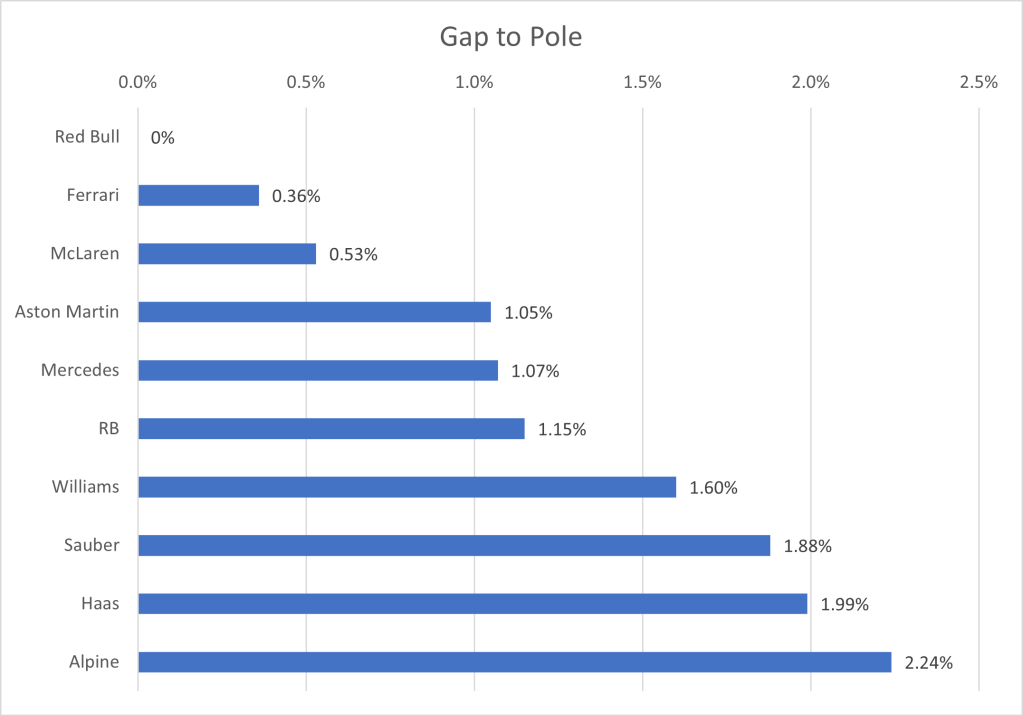
And for the teams:
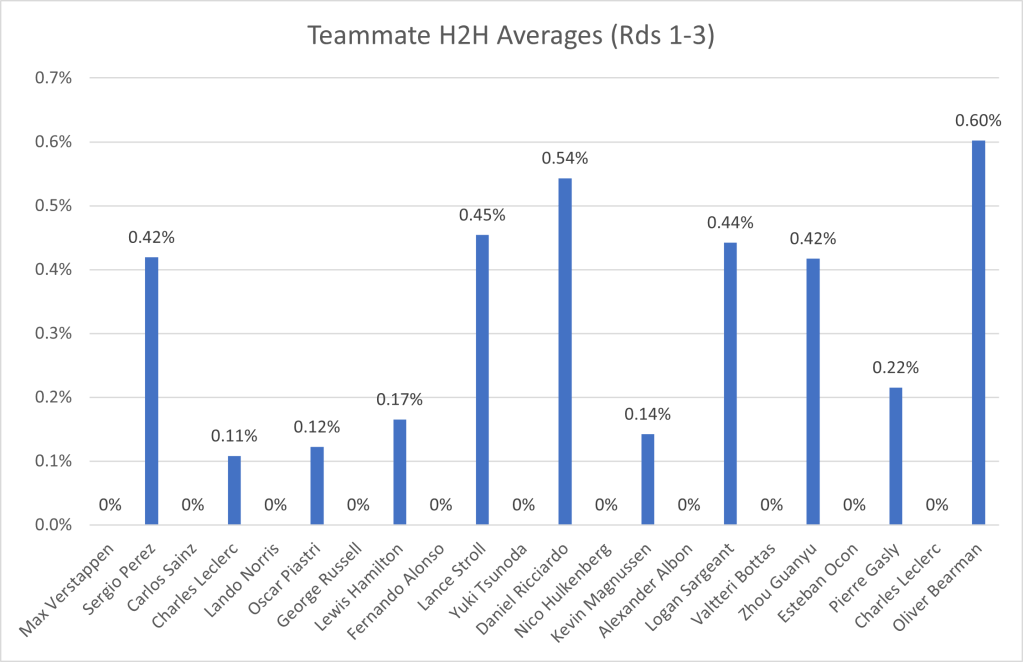
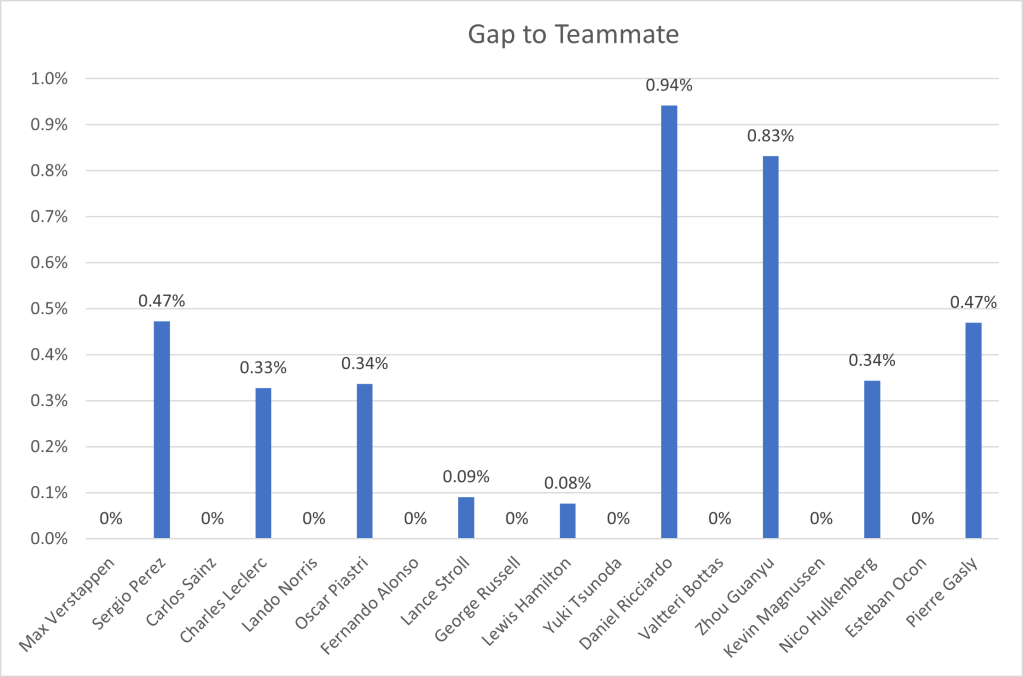
Additionally, I have collected the data for the gaps between teammates. I did this by using their fastest lap times set in the same session, so if one driver got into Q3, whilst the other only got into Q2, then I would count their Q2 times. Additionally, the lap times have to be representative, to avoid comparing out laps completed before a driver breaks down, as this would give us a very inaccurate representation of the drivers’ pace. Williams have no comparison for Australia, as Sargeant did not take part in the weekend after Albon’s crash:
Race Pace-
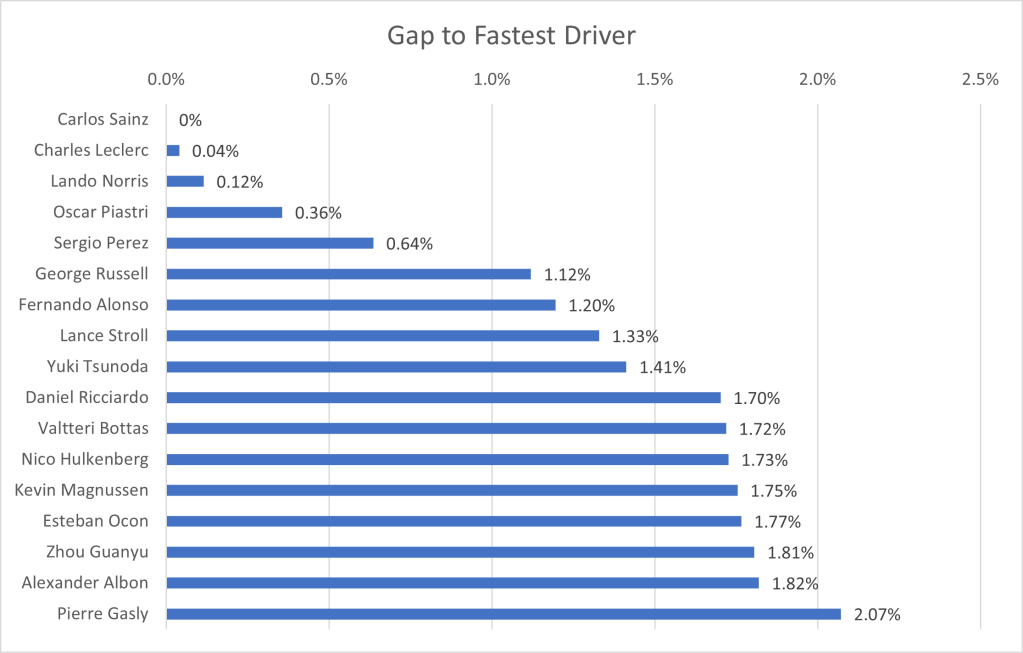
Next up in our data sets is the race pace of the drivers. I have calculated the average pace of the drivers, removing first laps, in-laps, out-laps and virtual safety car laps, as all these all not representative of a driver’s general pace. Additionally, if a driver has a spin, or another error that would greatly reduce their lap time, I have not counted these laps, as they would also not be representative of a drivers’ general pace.[1] I have only included drivers that completed at least 75% of the race distance (which for Australia, excludes Lewis Hamilton and Max Verstappen) so to not skew the season long averages against drivers that did not drive on low fuel with the best track conditions.
As different drivers have a varying number of race stints, this skews the overall pace. Generally, if a driver makes more stops, their pace will be faster on average. This will be taken into account in my final thoughts and analysis. Additionally, the average pace per stint and number of stints are recorded at the bottom of this article, for those interested in viewing more precise estimates of pace relative to other drivers on the same stint.[2]
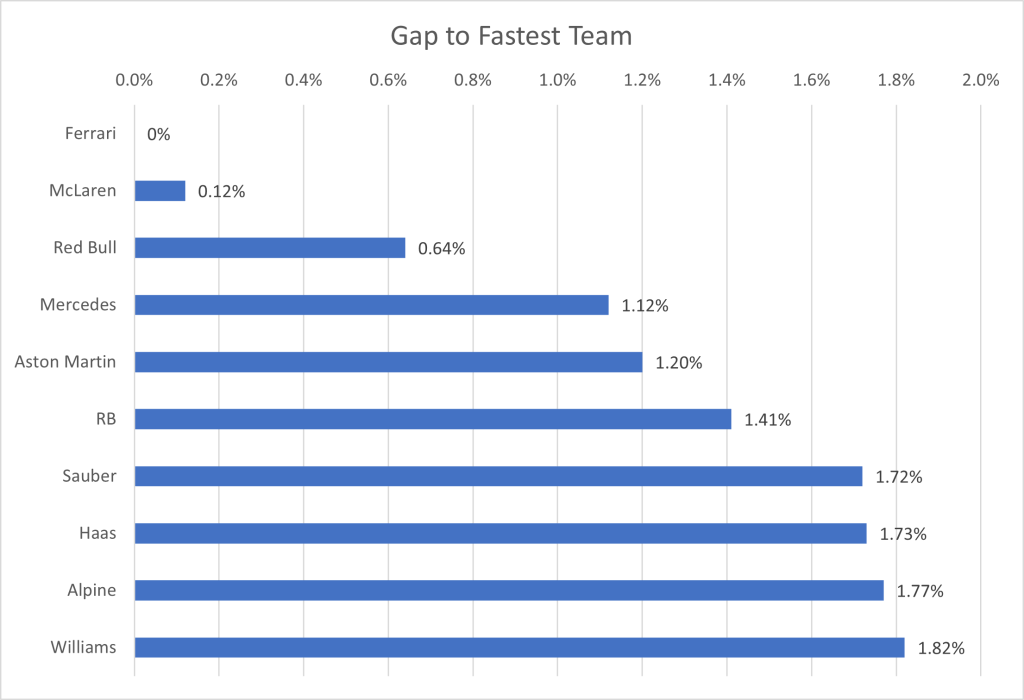
And for the teams:
Analysis:
Further Resources-
Qualifying Pace:
| Driver | Fastest Qualifying Time |
| Max Verstappen | 75.915 (0%) |
| Carlos Sainz | 76.185 (+0.356%) |
| Sergio Perez | 76.274 (+0.473%) |
| Charles Leclerc | 76.304 (+0.512%) |
| Lando Norris | 76.315 (+0.527%) |
| Oscar Piastri | 76.572 (+0.865%) |
| Fernando Alonso | 76.71 (+1.047%) |
| George Russell | 76.724 (+1.066%) |
| Lance Stroll | 76.78 (+1.139%) |
| Yuki Tsunoda | 76.788 (+1.150%) |
| Lewis Hamilton | 76.96 (+1.377%) |
| Alexander Albon | 77.13 (+1.600%) |
| Valtteri Bottas | 77.34 (+1.877%) |
| Kevin Magnussen | 77.427 (+1.992%) |
| Esteban Ocon | 77.617 (+2.242%) |
| Nico Hulkenberg | 77.976 (+2.715%) |
| Pierre Gasly | 77.982 (+2.723%) |
| Daniel Ricciardo | 78.085 (+2.858%) |
| Zhou Guanyu | 78.188 (+2.994%) |
Average Race Pace:
| Driver | Pace |
| Carlos Sainz | 81.458 (0%) |
| Charles Leclerc | 81.491 (+0.040%) |
| Lando Norris | 81.552 (+0.115%) |
| Oscar Piastri | 81.749 (+0.356%) |
| Sergio Perez | 81.977 (+0.636%) |
| George Russell | 82.37 (+1.120%) |
| Fernando Alonso | 82.432 (+1.195%) |
| Lance Stroll | 82.541 (+1.329%) |
| Yuki Tsunoda | 82.609 (+1.413%) |
| Daniel Ricciardo | 82.844 (+1.702%) |
| Valtteri Bottas | 82.858 (+1.719%) |
| Nico Hulkenberg | 82.864 (+1.726%) |
| Kevin Magnussen | 82.887 (+1.754%) |
| Esteban Ocon | 82.897 (+1.766%) |
| Zhou Guanyu | 82.93 (+1.806%) |
| Alexander Albon | 82.941 (+1.820%) |
| Pierre Gasly | 83.146 (+2.072%) |
All Stints:
| Best Stints | Pace |
| Norris 3rd (16L/UH) | 80.333 |
| Sainz 3rd (15L/NH) | 80.485 |
| Piastri 3rd (16L/UH) | 80.561 |
| Leclerc 3rd (22L/NH) | 80.588 |
| Russell 3rd (10L/NH) | 80.7 |
| Perez 3rd (21L/NH) | 81.084 |
| Alonso 3rd (18L/UH) | 81.096 |
| Stroll 3rd (18L/UH) | 81.447 |
| Sainz 2nd (22L/NH) | 81.543 |
| Tsunoda 3rd (19L/NH) | 81.711 |
| Gasly 3rd (13L/NH) | 81.711 |
| Norris 2nd (22L/UH) | 81.764 |
| Hulkenberg 3rd (20L/NH) | 81.91 |
| Ocon 4th (12L/UH) | 81.93 |
| Leclerc 2nd (21L/NH) | 82.016 |
| Perez 2nd (17L/NH) | 82.18 |
| Magnussen 3rd (22L/NH) | 82.188 |
| Bottas 3rd (18L/NH) | 82.191 |
| Piastri 2nd (25L/UH) | 82.215 |
| Zhou 2nd/3rd (19L/NH) | 82.231 |
| Ricciardo 2nd/3rd (26L/NH) | 82.344 |
| Sainz 1st (14L/NM) | 82.367 |
| Albon 2nd/3rd (28L/NH) | 82.618 |
| Russell 2nd (33L/NH) | 82.731 |
| Leclerc 1st (7L/NM) | 82.754 |
| Alonso 2nd (22L/UM) | 82.764 |
| Norris 1st (12L/NM) | 82.787 |
| Piastri 1st (7L/NM) | 82.798 |
| Hulkenberg 2nd (16L/NM) | 82.887 |
| Ocon 2nd (5L/NH) | 83.077 |
| Ocon 3rd (24L/NH) | 83.12 |
| Tsunoda 2nd (23L/NH) | 83.126 |
| Stroll 2nd (25L/UH) | 83.155 |
| Bottas 2nd (25L/UH) | 83.155 |
| Perez 1st (12L/NM) | 83.177 |
| Russell 1st (6L/NM) | 83.168 |
| Alonso 1st (15L/UH) | 83.192 |
| Hamilton 2nd (7L/NH) | 83.205 |
| Albon 1st/2nd (17L/NH) | 83.252 |
| Gasly 2nd (22L/NH) | 83.263 |
| Stroll 1st (6L/UM) | 83.264 |
| Zhou 1st/2nd (25L/UH) | 83.273 |
| Ricciardo 1st/2nd (20L/NH) | 83.284 |
| Magnussen 2nd (23L/NH) | 83.347 |
| Tsunoda 1st (7L/NM) | 83.349 |
| Hamilton 1st (5L/NS) | 83.456 |
| Bottas 1st (6L/UM) | 83.624 |
| Ocon 1st (7L/NM) | 83.662 |
| Magnussen 1st (5L/NM) | 83.851 |
| Hulkenberg 1st (15L/NH) | 84.112 |
| Gasly 1st (15L/NM) | 84.219 |
Key: 1L= One Lap, 2L= Two Laps, NH= New Hards, UH= Used Hards, NM= New Mediums, NS= New Softs
Number of Stints:
| Number of Stints | Drivers |
| 2 | Albon*,Ricciardo*,Zhou*, Hamilton |
| 3 | Sainz, Leclerc, Norris, Piastri, Perez, Stroll, Tsunoda, Alonso, Hulkenberg, Magnussen, Albon*, Ricciardo*, Gasly, Bottas, Zhou*, Russell |
| 4 | Ocon |
[1] For example, I removed Oscar Piastri’s lap 38, as he went into the gravel and lost at least 5 seconds. Albon lap 56, Ricciardo lap 53 and Gasly lap 16 also looked suspect, but I was unable to find any evidence of a major mistake, so these laps were left in.
[2] I only count a stint if a driver has completed five or more laps, to avoid short stints for fastest lap attempts skewing the data on the table. This has led to the official first stints of Albon, Ricciardo and Zhou not being included in the table, though this is represented through the labeling of their stints as 1st/2nd and 2nd/3rd
Pole Position: Oscar Piastri
Bold Prediction: Sauber Double DNF
What more is there to say about Carlos’ performance that hasn’t already been said? After having an operation for appendicitis two weeks before, Sainz returned and won the race in a dominant fashion. It was a truly superhuman performance from Carlos, who continues to prove himself a driver who deserves to be in a top seat.
2. Lando Norris-
Sainz’s former teammate maximized all his opportunities in Australia. After pit strategy put Norris behind his teammate, Oscar Piastri, McLaren later ordered Piastri to let Norris past on lap 29. Norris then proceeded to build a 30 second gap to his teammate in 29 laps. This shows that Norris was dominant in the McLaren team in Australia and he believes that he could have beaten Leclerc to second, with better strategy.
3. Yuki Tsunoda-
Tsunoda is beginning to embarrass Daniel Ricciardo. In a year in which Ricciardo was supposed to prove he was still the driver who left Red Bull, he’s instead proving he is the driver who was dropped from McLaren. Whilst Ricciardo was nowhere during his home race, Yuki was consistently in the hunt for points and he left with six of them. Whether Yuki’s performances become consistent enough to lead to a Red Bull seat is yet to be seen, but he may have already ended Ricciardo’s chances.
4. Lance Stroll-
Lance deserves praise for his performance this weekend. He outqualified Alonso and finished ahead of him in the race, albeit this was assisted by Alonso’s debatable penalty. But still, Lance showed good pace, kept it clean and scored a large haul of points for Aston Martin to help maximize their opportunities in a week their silver rivals did anything but.
5. Nico Hulkenberg-
Nico Hulkenberg made it back-to-back points finishes in Australia. Whilst not maximizing qualifying, he maximized his race performance, to finish in front of all the other cars in the midfield, bar Tsunoda. With three front running cars retiring in Australia, this resulted in 9th and 10th finishing places for Haas, further bringing forward their revival under new team principle Komatsu.
Tally:[1]
[1] Of how many times drivers have featured in these lists.
Note: This article is a supplementary piece to the Pace and Analysis articles I publish on the individual races
Average Qualifying:
Teammate Head to Heads:
Race Pace Averages:
 Ryan's Lil' F1 Blog