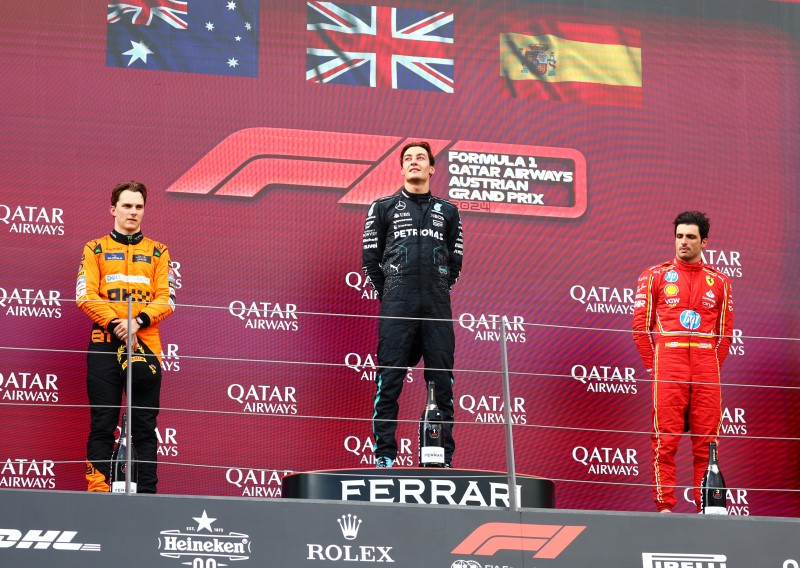
As I said in my review, George drove a perfect weekend with no mistakes in Austria. Whilst the Mercedes did not have the pace of Max and Lando, Russell capitalized on the opportunity provided by the collision to take a well-deserved second win. He’s one of the most talented drivers in Formula One, when he has the car to win regularly, he’ll deliver.
2. Carlos Sainz-
Whilst not always being the fastest Ferrari driver, Sainz maximized his weekend by making no mistakes. While Leclerc made a mistake in qualifying that led to his race falling apart on lap one, Sainz drove calmly, had a good battle with Hamilton and took a podium on a weekend where it was completely unexpected.
3. Nico Hulkenberg-
Hulkenberg drove a fantastic race in his Haas, to take his best result since 2019 in sixth. He even kept Perez in a Red Bull behind until the end of the race. Albeit, the Red Bull was damaged, but this was still a fantastic performance that showed Nico’s talents.
4. Kevin Magnussen-
Magnussen looked the faster of the Haas drivers through most of the weekend, until qualifying and the race. After a fun battle with Hulkenberg, Kevin settled behind. However, he still finished in eighth, taking home an additional four points to give Haas as many points this weekend as they got throughout the entirety of last year.
5. Daniel Ricciardo-
It was another solid weekend from Ricciardo, outqualifying his teammate and driving a solid race to take a couple of points for the RB team. He has seen an uptick in form recently and whilst it has proven too late to steal that illustrious Red Bull seat, it shows that he still has the skills to succeed in Formula One.
The Red Bull Ring is always a fun track. With a simple layout and three DRS zones, the track encourages overtaking and battling throughout many laps. The Grand Prix this year was a good watch, providing entertaining battles and late race drama. Whilst the race felt like it was lacking a cohesive narrative and felt more like a series of disconnected events, the events in themselves were fun. Not fun for a Leclerc fan, but the action towards the end of the race distracted from that particular disappointment.
Before the drama at the race’s conclusion, there were limited moments of intrigue throughout the first two stints. In particular, there were some exciting teammate rivalries to ruminate on. The first example came when the Haas cars made their first stops, with Magnussen and Hulkenberg proceeding to pass and repass each other as their respective engineers begged for them to work together to save tyres. It took a few minutes of convincing and some colourful language from Magnussen to get there, but eventually the Haas boys calmed down and recorded their best finish of the season. The Alpine boys were not so quick to settle, as they engaged in yet another vicious battle. Whilst it was a tremendously foolish idea to ever make Ocon and Gasly teammates, it provides fans with the entertainment of watching two people who absolutely despise each other fight. As always, the way they raced each other demonstrated their feelings, as they were fighting through for multiple laps, whilst pushing each other off the track at every opportunity. Eventually Gasly passed Ocon, but the fighting likely lost both drivers time and tyres. However, the fact that at any track these drivers never stop fighting makes up for the lack of sensibility with a flurry of entertainment.
Whilst the first two thirds of the race were not boring, it was during the final third that the main spectacle came to pass. Red Bull had already made a mistake during practice, using too many medium tyres when these would prove the strongest in the race. Thus, they had to put Verstappen on an old set of mediums for his final stint. Combined with a slow pit stop and a lock up, this put Lando Norris right on Verstappen’s tail. For a number of laps, Norris tried to hustle his way past, in a battle that was as thrilling as it was silly. Both drivers didn’t show their best qualities during this duel. On Norris’ behalf, his hastiness to overtake Max led him to commit to some silly divebombs and opportunistic overtakes. This showed a lack of solid race craft during high pressure moments from Lando. On Verstappen’s behalf, he demonstrated his willingness to be too aggressive when he feels he can get away with breaking the rules. Virtually every time Norris attempted to overtake, Max would move in the braking zone to push Lando into backing out. The stewards repeatedly failed to intervene to stop Verstappen’s illegal tactics, despite the rule breaking being obvious to anyone watching the race. With Norris and Verstappen both getting increasingly angry at each other’s driving, there was only one way this battle could end.
Thus, on lap 64, as Norris tried to overtake, Max moved under braking again. But Norris didn’t back down and they collided in a dramatic fashion. This gave both of them punctures and was a fantastic example of why the stewards should punish illegal tactics before those tactics lead to the inevitable. One would have thought that the stewards would have learnt their lesson from the events of 2021, but instead they let history repeat itself. Whilst I often criticize Lando Norris, in this moment I have to praise his resolve. He showed Verstappen that he wasn’t prepared to be pushed around. Whilst Norris lost out more from the collision, as he had to retire whilst Verstappen finished fifth, this is still good if Norris wants to be in regular battle with Verstappen. Norris needs to carry the aggression forward throughout the season, as you can only beat Verstappen by meeting his aggression.
The collision between the leaders led to the biggest surprise of the afternoon, George Russell winning. This was the first Mercedes victory since Russell’s win in Brazil 2022 and whilst it fell into his hands, it was nevertheless well deserved. George has been fantastic this year, regularly outqualifying his teammate and proving that he can become Mercedes’ team leader. He drove a perfect weekend, making no mistakes where others faltered. I said that he needed to win another race during my Canada review, to prove his critics wrong. George delivered in the best way possible and I’m sure the Mercedes factory enjoyed their champagne Monday.
Max proved once again that he doesn’t need the fastest car to win. He maximized the opportunity the start gave him, passing Russell with ease and building a first stint lead that Norris was unable to overturn. Races like these remind all fans of the quality of Max Verstappen.
2. Lewis Hamilton-
Whilst this season has largely been a challenge for Lewis, he had a good performance in Barcelona, qualifying ahead of his teammates and the Ferraris. Whilst not having the start Russell had, Lewis was able to perfectly execute his superior strategy to take the third step on the podium.
3. George Russell-
Whilst not being on the preferred strategy, George showed his talents throughout the race, with a fantastic start to take the lead from fourth and great defending later on from Norris’ quicker tyres. Whilst he didn’t quite make the podium, Russell achieved the maximum result he could with his strategy.
4. Charles Leclerc-
Whilst having to handle an aggressive Sainz early on, Leclerc played the patient game, following Norris’ strategy to have quicker tyres throughout the second and third stints. During these stints, his race pace was apparent, almost equal to Verstappen and Norris. Whilst running out of time to catch Russell, Leclerc proved the more talented Ferrari driver of the weekend.
5. Pierre Gasly-
Gasly had a fantastic weekend in Spain, outqualifying and nearly beating the Red Bull of Perez. With Alpine starting to creep up the midfield, Gasly is beginning to appear like the Alpine driver in form at the point where points are finally on offer. However, with both drivers appearing close, I would not be surprised to see more collisions throughout the year.
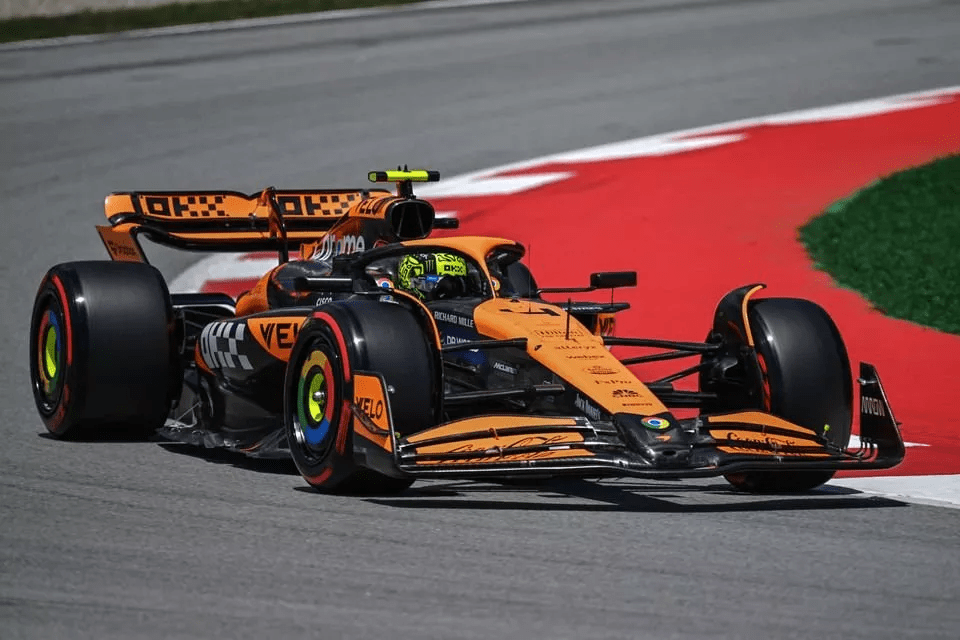
Whilst hardly a thriller, this year’s Formula One race in Barcelona gave us an interesting strategic battle between Max Verstappen and Lando Norris. Norris and McLaren demonstrated the many ways to lose a race with the fastest car, whilst varying tyre choices across the field kept the race intriguing.
It looked promising on Saturday for Lando to take his second win, after he achieved his first pole position since 2021. Whilst the Red Bull was close in qualifying trim, the McLaren would prove to be faster during the race. However, the race start can be vital at Barcelona and Lando failed to capitalize. Whilst he was busy pushing Verstappen onto the grass, George Russell utilized the outside line to sweep past the pair of them. Stuck in the middle of the situation, Lando was squeezed from first into third. Verstappen then swiftly utilized his Red Bull’s superior top speed to overtake Russell’s Mercedes on lap three. Lando, on the other hand, did not have the top speed advantage to overtake a Mercedes on equal tyres, so found himself stuck behind the slower Russell for the entire first stint. This allowed Verstappen to build a healthy lead over Norris by the end of the stint and forced McLaren onto an alternative strategy to have any hope of catching the Red Bull.
In response to being stuck in the George Russell train, McLaren decided to pit Norris much later than the other front runners, to give him a tyre advantage over Verstappen. However, whilst Norris was significantly faster than Verstappen, he was forced to pass Carlos Sainz, Lewis Hamilton and George Russell on track. All the time Norris spent following and passing other cars would be a detriment upon his advantage. Whilst Sainz and Hamilton proved easy pickings for Lando, George showed his prowess by forcing Lando into a duel. Whilst Lando eventually won the battle, he lost vital time to Verstappen through this sequence. To avoid the necessity of passing slower cars again, McLaren pitted Lando for his third stint slightly earlier than they would have desired. So, he had less of an advantage over Verstappen and whilst he closed up, Lando ran out of time to catch Max, finishing two seconds behind. With a better start, quicker stops, more decisive passes and an uncompromised strategy, McLaren could have won this race. In contrast, bottling all these things left Norris unhappy with second place.
Further down the field the uncertainty in tyre strategies proved to the detriment of some drivers. Whilst Russell and Sainz took the early leads in their respective inter-team battles, they were both put onto the hard tyres for the last stint. With their teammates proving faster on new soft tyres, both drivers were forced to cede position. By the end of the race, both were also not far from losing positions to Leclerc and Piastri respectively. This showed the uncertainty that a hot day on an abrasive circuit can bring, as teams become less sure what tyres to put their drivers on. It was unlikely that Mercedes and Ferrari intended to put their leading drivers on a compromised strategy, but it would certainly prove to the disappointment of Russell and Sainz. But sometimes, strategy is key and strategy in Spain won Lewis Hamilton his first podium of the year, bringing some happiness to a season that he has so far found lacking.
In conclusion, Spain was interesting throughout, if not outstanding. When a race circuit is slightly more difficult to overtake, it pays to have differing tyre strategies. Barcelona is not a bad circuit by any means and there were some amazing turn one overtakes by Russell, Norris and Hamilton throughout the race. But, seeing this race makes me want tyres with higher degradation, to throw more strategic upsets into the mix.
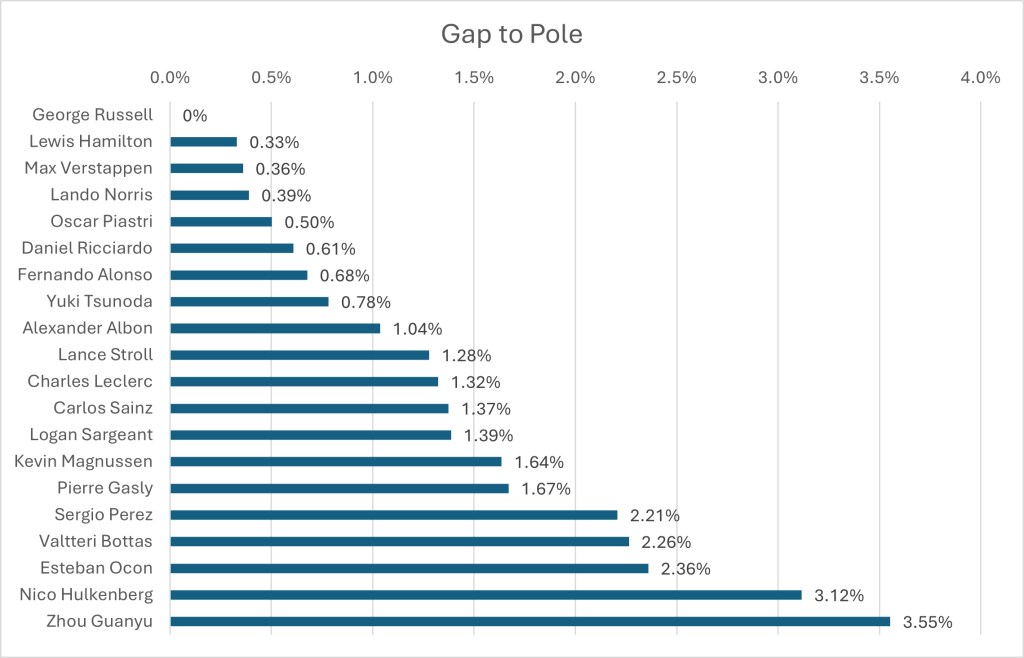
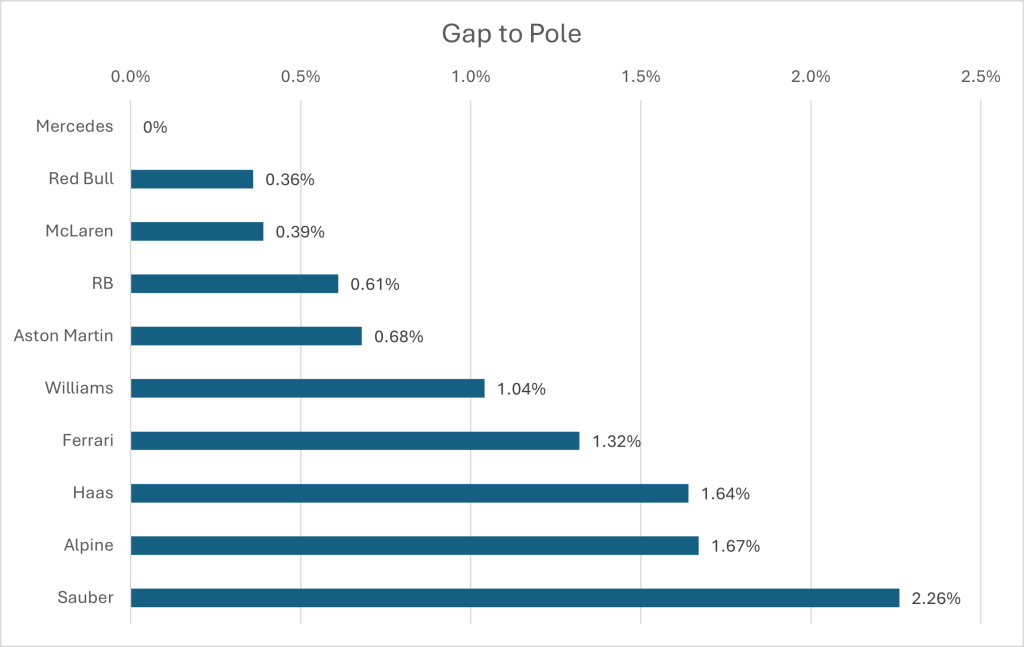
I have collated the fastest laps by each driver in qualifying, to show the average gap to the fastest driver. Whilst this extends the gap between drivers who made it to the top ten and those below, I’ve ruled using the overall fastest times a better grounding point for the true limit of the top cars, as the cars most likely to compete for points are my primary focus in these analyses.
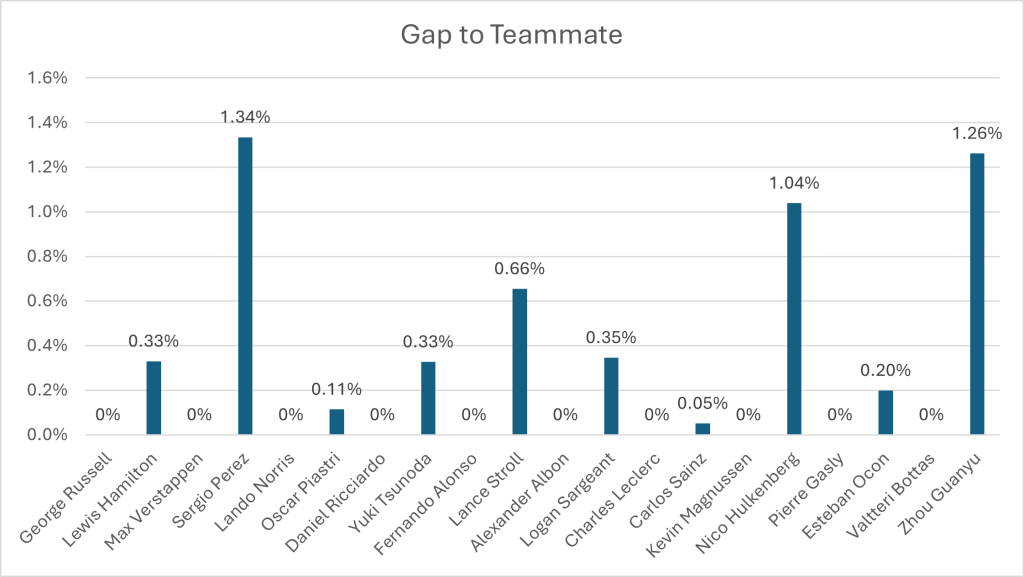
Additionally, I have collected the data for the gaps between teammates. I did this by using their lap times set in the same qualifying session. I generally compare the last session both drivers competed in, however if the fastest driver drove their fastest time in an earlier session, I count these times instead.
Race Pace-
I have calculated the average pace of the drivers, removing race starts, laps in the pit lane and laps under the safety car as these are all too slow to be representative. I have only included drivers that completed at least 75% of the laps to not skew the season averages against drivers that never got the chance to run their cars on low fuel, which excludes both Ferrari drivers, both Williams drivers and Sergio Perez in Canada
As different drivers have a varying number of race stints, this skews the overall pace. Generally, if a driver makes more stops, their pace will be faster on average. This will be considered in my final thoughts and analysis. Additionally, the average pace per stint and number of stints are recorded at the bottom of this article, for those interested in viewing more precise estimates of pace relative to other drivers on the same stint.[1]
Analysis:
Norris was a faster driver than Verstappen across all of the stints, the average pace is only slightly faster for Verstappen due to him stopping for dry tyres a couple laps earlier than Norris.
Perez was tremendously slow in this race before his accident. Of all the drivers, only Zhou was slower than Perez in the initial stint on intermediates. Verstappen, in comparison, was only slower than the McLarens.
Whilst no Ferrari finished the race, they looked slower than most other cars in Canada. Whether due to set-up issues or not, this shouldn’t be happening for a team contending for the constructor’s championship.
Magnussen looked particularly quick in his initial stint on wet tyres, setting laps up to two seconds quicker than Hulkenberg on the same tyres.
The Sauber is really beginning to look like the clear backmarker of the season. Whilst it started the year on pace with the rest of the lower midfield, if not faster at times, they have slipped back.
Further Resources-
Qualifying Pace:
Driver
Fastest Qualifying Time
George Russell
71.742 (0%)
Lewis Hamilton
71.979 (+0.330%)
Max Verstappen
72 (+0.360%)
Lando Norris
72.021 (+0.389%)
Oscar Piastri
72.103 (+0.503%)
Daniel Ricciardo
72.178 (+0.608%)
Fernando Alonso
72.228 (+0.677%)
Yuki Tsunoda
72.303 (+0.782%)
Alexander Albon
72.485 (+1.036%)
Lance Stroll
72.659 (+1.278%)
Charles Leclerc
72.691 (+1.323%)
Carlos Sainz
72.728 (+1.374%)
Logan Sargeant
72.736 (+1.386%)
Kevin Magnussen
72.916 (+1.636%)
Pierre Gasly
72.94 (+1.670%)
Sergio Perez
73.326 (+2.208%)
Valtteri Bottas
73.366 (+2.264%)
Esteban Ocon
73.435 (+2.360%)
Nico Hulkenberg
73.978 (+3.117%)
Zhou Guanyu
74.292 (+3.554%)
Average Race Pace:
Driver
Pace
Max Verstappen
84.824 (0%)
Lando Norris
84.834 (+0.012%)
George Russell
85.011 (+0.220%)
Oscar Piastri
85.037 (+0.251%)
Lewis Hamilton
85.197 (+0.440%)
Kevin Magnussen
86.233 (+1.662%)
Nico Hulkenberg
86.299 (+1.739%)
Fernando Alonso
86.318 (+1.761%)
Lance Stroll
86.518 (+1.998%)
Daniel Ricciardo
86.546 (+2.030%)
Pierre Gasly
86.583 (+2.074%)
Esteban Ocon
86.763 (+2.286%)
Yuki Tsunoda
86.947 (+2.503%)
Valtteri Bottas
87.131 (+2.720%)
Zhou Guanyu
88.073 (+3.830%)
All Stints:
Best Stints
Pace
Hamilton 4th (11L/NH)
76.154
Russell 4th (11L/NM)
76.187
Norris 3rd (16L/NM)
77.001
Verstappen 3rd (18L/NM)
77.31
Magnussen 5th (11L/NM)
77.82
Piastri 3rd (19L/NM)
78.191
Alonso 3rd (18L/NH)
79.083
Hulkenberg 4th (18L/NM)
79.167
Stroll 3rd (18L/UH)
79.224
Ricciardo 3rd (19L/UM)
79.572
Ocon 2nd (18L/NM)
79.475
Zhou 4th (13L/NM)
79.475
Russell 3rd (7L/NH)
79.774
Tsunoda 2nd (17L/NM)
79.95
Gasly 3rd (22L/NH)
80.078
Bottas 2nd (20L/NM)
80.575
Hamilton 3rd (9L/NM)
80.743
Sainz 3rd (8L/NM)
81.445
Albon 3rd (7L/NM)
81.555
Perez 3rd (7L/NM)
81.764
Magnussen 4th (10L/NM)
83.141
Norris 2nd (17L/NI)
86.099
Verstappen 2nd (15L/NI)
86.272
Russell 2nd (15L/NI)
86.468
Piastri 2nd (14L/NI)
86.692
Hamilton 2nd (13L/NI)
86.868
Alonso 2nd (14L/NI)
87.596
Zhou 3rd (6L/NM)
87.616
Hulkenberg 2nd (10L/NI)
87.783
Hulkenberg 3rd (13L/NI)
87.833
Stroll 2nd (14L/NI)
87.868
Albon 2nd (14L/NI)
87.964
Leclerc 4th (8L/NI)
88.168
Perez 2nd (13L/NI)
88.329
Ricciardo 2nd (13L/NI)
88.334
Sainz 2nd (13L/NI)
88.42
Zhou 2nd (14L/NI)
88.935
Magnussen 3rd (11L/NI)
89.092
Gasly 2nd (10L/NI)
89.15
Magnussen 2nd (16L/NI)
89.179
Norris 1st (23L/NI)
89.349
Piastri 1st (23L/NI)
89.685
Verstappen 1st (23L/NI)
89.759
Russell 1st (23L/NI)
89.873
Tsunoda 1st (37/NI)
90.161
Ocon 1st (37L/NI)
90.308
Hamilton 1st (23L/NI)
90.321
Bottas 1st (35L/NI)
90.878
Alonso 1st (23L/NI)
91.201
Ricciardo 1st (23L/NI)
91.297
Stroll 1st (23L/NI)
91.405
Albon 1st (23L/NI)
91.531
Sainz 1st (23L/NI)
91.621
Gasly 1st (23L/NI)
91.69
Leclerc 1st (23L/NI)
91.754
Sargeant 1st (21L/NI)
91.834
Perez 1st (23L/NI)
91.898
Zhou 1st (23L/NI)
92.729
Magnussen 1st (5L/NW)
95.212
Hulkenberg 1st (10L/NW)
95.656
Key: 1L= One Lap, 2L= Two Laps, NW= New Wets, NI= New Inters, UM= Used Mediums, UH= Used Hards.
[1] I only include stints in the stint table if a driver has completed five or more representative laps, in an attempt to avoid fastest lap attempts. This has led to exclusions from the chart of Leclerc’s second and third stints.
Along with Imola, this race has to go down as one of Verstappen’s greatest victories. In the trickiest of conditions, no driver was perfect, but Verstappen made the least mistakes, in a car that seldom appeared the fastest.
2. George Russell-
George may have made a few mistakes throughout the race, but it was still a fabulous performance. In a track that his teammate has often excelled at, George once again proved that he is currently the fastest and most reliable Mercedes driver, to duly deliver his team their first podium of the year.
3. Alexander Albon-
Whilst a late spin from Sainz took Albon out of the race, he reminded everyone the fighter he is with his performance throughout the race. In particular, his double overtake on Ricciardo and Ocon, where he slipped through the tiniest gap in the middle of the two cars, was sublime.
4. Daniel Ricciardo-
After justified criticism from Jacques Villeneuve, Daniel decided to show up this week, qualifying in fifth and finishing the race in eighth, despite a jump start penalty. It was a solid performance and if Daniel can keep these up, he will justify why he should stay in Formula One.
5. Alpine-
I’m breaking my rules again and giving half a point to each of the Alpine drivers. Esteban Ocon drove from the back of the grid into the points, which is always worth a shout out and Pierre Gasly also delivered a points finish. Despite a post-race controversy about a controversial driver swap at the end of the race, both drivers showed their talents still shine through in a bad car.
Thrilling conditions often bespoke a thrilling race. Which is exactly what Formula One provided in Canada. Featuring a three-way battle for the win, incidents aplenty and Alex Albon making the overtake of the year, Canada delivered a wet-to-dry classic that fans will be talking about for years to come.
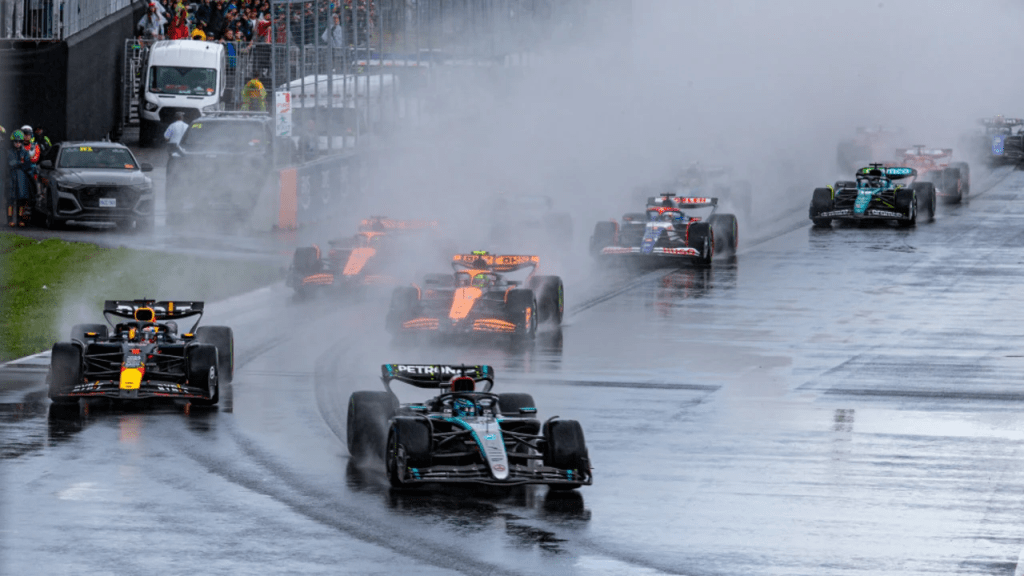
After an equally thrilling qualifying, which saw George Russell and Max Verstappen set the exact same pole time, conditions at the start of the race were incredibly wet. As all the runners on the intermediate tyres struggled for grip, one team made moves across the field. As Haas had elected to start on the wet tyres, they were instantly the fastest cars on the circuit. My favourite chaos merchant Kevin Magnussen made fine use of his extra grip, moving from fourteenth to fourth in the space of a few laps. It seemed like Haas had made a fantastic gamble, but within a few laps, as the track started to dry, conditions moved towards the intermediate runners. It was at this point that Haas needed to bring Kevin in for a pit stop. They did this, albeit forgetting to bring the tyres. So, Kevin’s work was all for nought, as he fell down the field, throwing away a chance of points. It was a shame to see Kevin’s performance yield no rewards, as he reminded everyone that when he’s not courting controversy, he’s a damn good racer.
As all the midfield chaos was occurring, George Russell was leading with Verstappen hot on his tail. The Mercedes showed a surprising flash of pace this weekend, likely bolstered by their upgrades and the colder conditions in Canada. After not being close to the podium all season, Russell was a legitimate contender for the win. It was a great turnaround, though as the two frontrunners fought, the McLaren’s of Norris and Piastri were getting closer and closer. McLaren had set their car up to prioritise tyre wear and this began to pay off, as Norris overtook both Verstappen and Russell to lead the race. He then began to pull away from the field and it began to appear like Lando’s second win was on the horizon. Then Logan Sargeant crashed and bought out the safety car. From here, things began to fall apart for Lando.
When the safety car was called, McLaren had just enough time to bring in Lando for a pit stop.[1] Unfortunately for them, they missed their opportunity, continuing an under-scrutinized trend of McLaren making poor strategic decisions at vital moments. As all the other front runners pitted, Norris had to complete another lap behind the safety car, resulting in him falling from first to third when he finally did pit. Norris would never regain the opportunity to win the race from this point onwards, despite attempting an overcut when switching to dry tyres. Whilst finishing second, this result was not was Norris was hoping for. Combined with the near miss at Imola, Norris has missed out on possible victories in two of the last three races. For a team that finally seems to have a championship contending car, McLaren have to take these opportunities.
As the race reached its dry zenith, it was the Mercedes of George Russell that looked to have the pace to challenge for Verstappen for the win. Yet, a series of small, costly errors throughout the race consistently put Russell into fights with other frontrunners that he could have avoided. This is a consistent trend many have noticed about George Russell. He is a fantastic driver, with supreme qualifying abilities and great race pace, but he makes mistakes at the exact wrong moments. At minimum, he could have finished second with his pace towards the end of the race, but instead had to settle for third. It was still a fantastic performance throughout the weekend for George, but he’s got to have to turn this narrative around soon. If Mercedes’ upgrade path is as fruitful as some are predicting, perhaps that opportunity could arise in Spain. If it does, George has to take it.
With such a fantastic race, the only thing that could possibly make me upset would be if Ferrari were to have an absolute howler. If, for example, they were to both qualify outside the top-10, then have race-ending engine issues on my favourite driver’s car, I would be upset. I would be even more upset if Ferrari’s other driver then proceeded to spin out of the race, in the process hitting my second favourite driver, who up to that point was having a brilliant race. For the sake of praising one of the best Formula One races of the last few years, I am going to choose to no longer ruminate on the fact that these exact events occurred.
So, despite certain events, this race had everything. Three teams fighting for the win, battles across the field, strategy gambles and Max Verstappen delivering a masterclass performance to remind everyone that even without a dominant car, he is a dominant driver. I won’t be forgetting this one anytime soon.
Whoever’s idea it was to follow up the excitement of the Indy500 with a race at a terrible street track in downtown Detroit needs to reflect on what they’ve done. Anyone who had watched the 500 and wanted to see what else IndyCar has to offer may not watch another race. With a track that is essentially a worse version of Baku, itself one of F1’s worst tracks, I expected the race to either be boring or chaotic to the point of frustration. Having now seen the second option play out, I really wish that this race was boring.
It’s unfortunate how the race unfolded, because the opening stint left some hope that it had some potential. This was because the teams mistakenly presumed that the softer green tyres would be preferrable. When Alex Palou, who had started the race in second on the greens, had to pit after dropping through the field like a boulder, it became apparent the harder black tyres were better. Realizing this, many teams prepared to adapt their strategies for a race that could have developed into an interesting tyre war. Instead, it began to rain.
Under a caution period, the track began to resemble a duck pond. At this point, many drivers, including the leading Colton Herta, pit for wet weather tyres. Then it stopped raining, whilst the safety car was still out. As the track dried up, every driver who had pitted regretted their choice, realizing they had handed a valuable win to Scott Dixon. Dixon managing to pull off one of his famous fuel saving strategies to take the win was the only saving grace from here on out. And even then, a Dixon master class is less impressive when nearly half the race was run under caution periods, due to events spiralling into some sort of demolition derby.
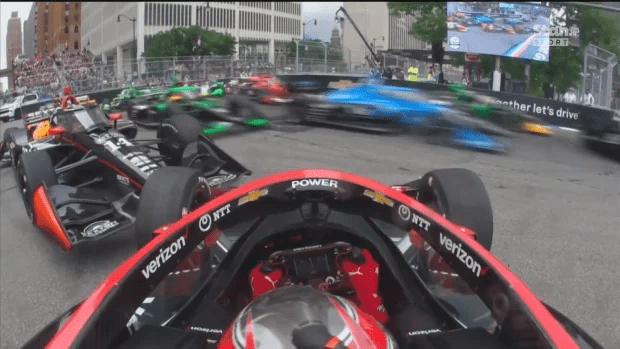
The aforementioned derby was not entertaining. Nearly every driver forgot what a braking point was and slammed into the sides of their competitors. Colton Herta was the only exception to this, preferring to miss his braking point so much that he slammed directly into the tyres at the end of the escape road. After having dominated the early stages of the race, Colton made another unforced error when he found himself lower down the field. His move was both emblematic of his championship challenge collapsing and a general lack of adherence to expected driving standards. It was not a great showing for the sensibilities of IndyCar’s drivers and destroyed whatever entertainment could have been salvaged out of the weekend.
Whilst personally dissatisfied at some of the racing standards on display, one thing from the Detroit weekend’s aftermath stuck out. You do not, under any circumstances, send abuse and death threats to anyone, for any reason, ever. This has been the warrant of a subsection of Augustin Canapino fans, who act like football ultras to anyone who crosses Augustin’s path. Theo Pourchaire was the target of abuse this time around, all for contact that was relatively minor compared to some of the incidents that took place during the race.[1] The abuse itself is already problematic, but Canapino’s response beggared belief, as he focused on how his fans were not responsible and questioned if Theo received death threats due to not having personally seen them.[2] This led to Augustin not racing at Road America and his team’s partnership with McLaren being terminated. Yet, Augustin’s response was not even the worst element of the whole debacle. That came from the team owner, Ricardo Juncos, who was heard calling Theo a ‘son of 1,000 wh***s.[3]’ It would be one thing for a driver, in the heat of the moment, to use inappropriate language towards a competitor. When the team owner is doing it, that speaks to a broader workplace cultural problem. And not only did Ricardo Juncos use inappropriate language, he used deeply misogynistic language, language that would not even come into my head to describe my worst enemy. All this, for minor contact. Juncos Hollinger need to do better.
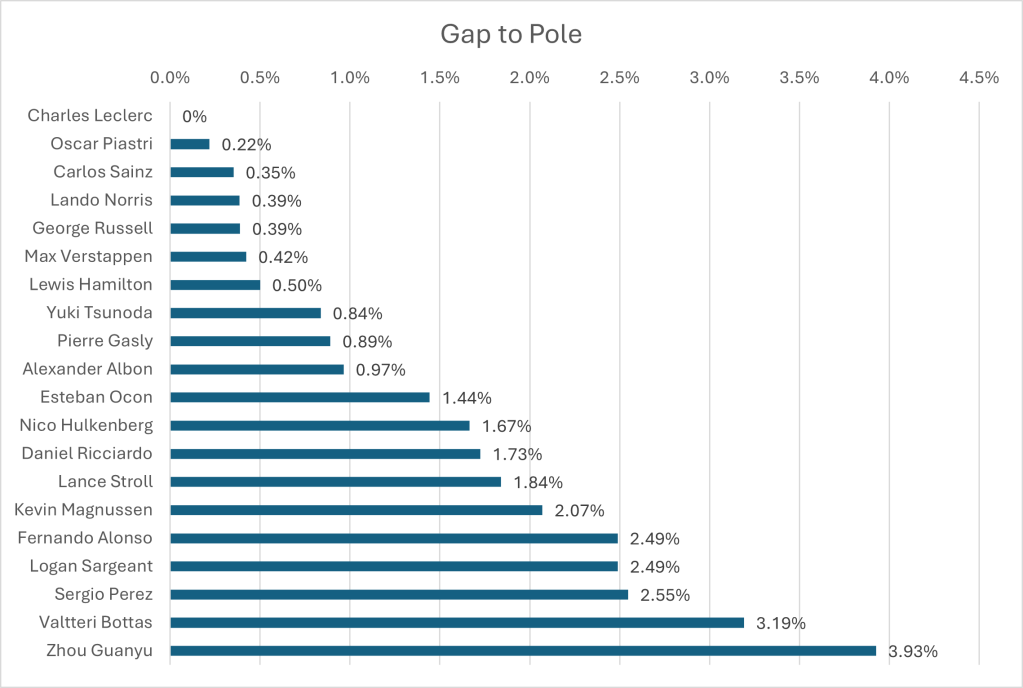
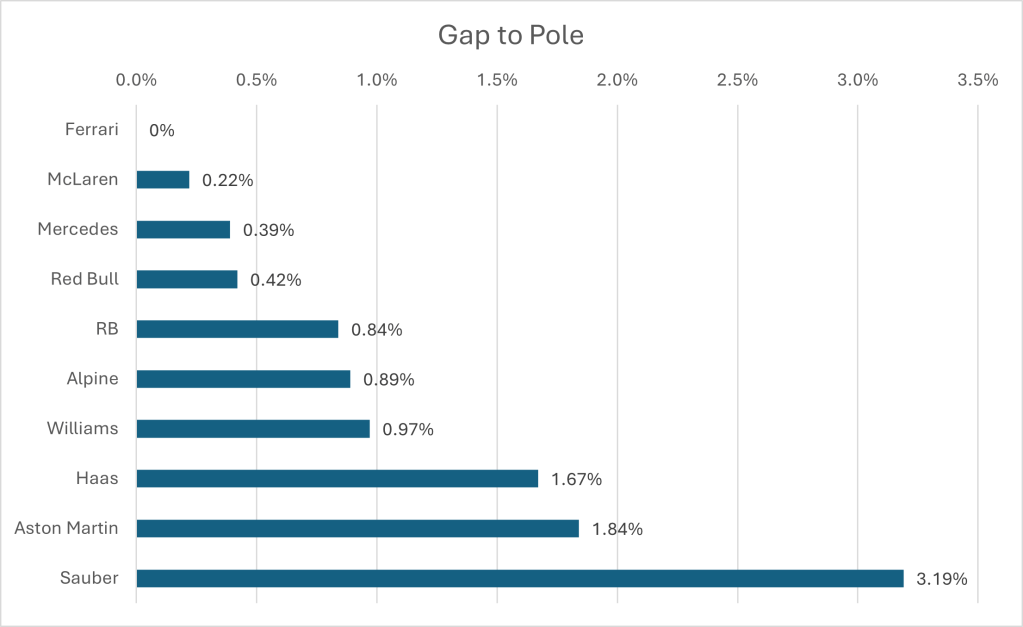
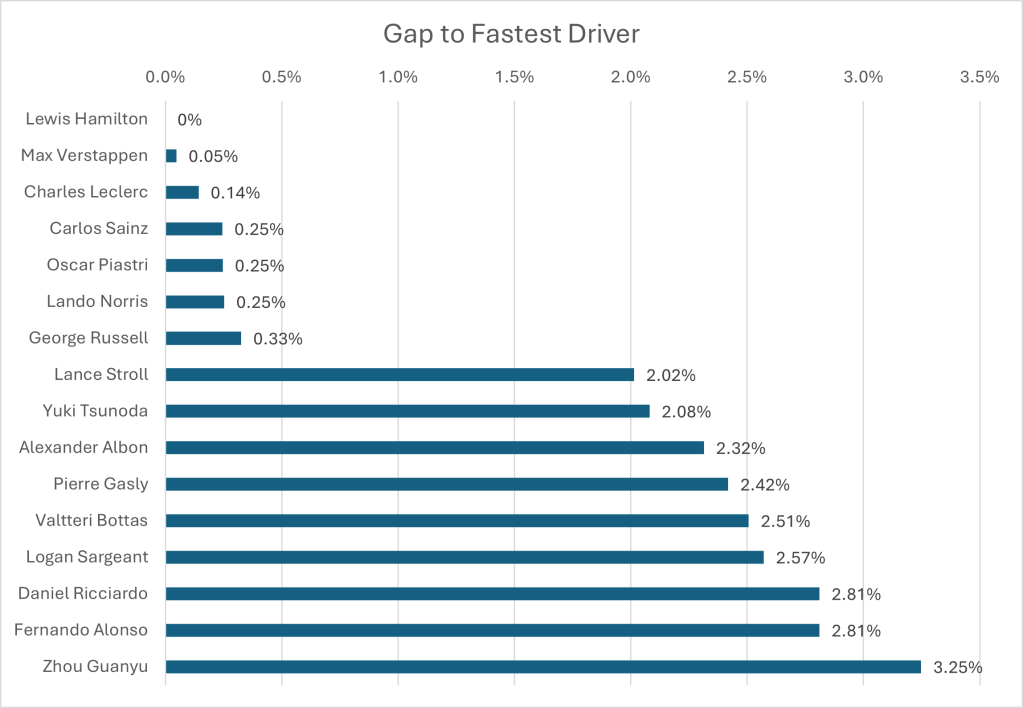
I have collated the fastest laps by each driver in qualifying, to show the average gap to the fastest driver. Whilst this extends the gap between drivers who made it to the top ten and those below, I’ve ruled using the overall fastest times a better grounding point for the true limit of the top cars, as the cars most likely to compete for points are my primary focus in these analyses.
Qualifying Pace-
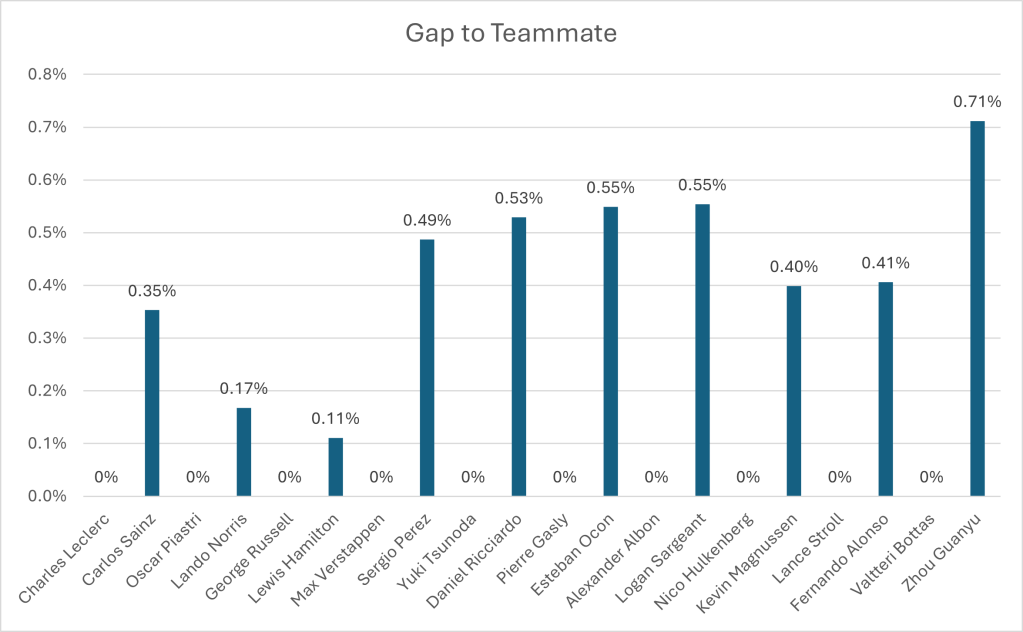
Additionally, I have collected the data for the gaps between teammates. I did this by using their lap times set in the same qualifying session. I generally compare the last session both drivers competed in, however if the fastest driver drove their fastest time in an earlier session, I count these times instead.
Race Pace-
I have calculated the average pace of the drivers, removing race starts, laps in the pit lane and extra formation laps as these are all too slow to be representative. I have only included drivers that completed at least 75% of the laps to not skew the season averages against drivers that never got the chance to run their cars on low fuel, which excludes Esteban Ocon, Sergio Perez and both Haas drivers in Monaco.
As different drivers have a varying number of race stints, this skews the overall pace. Generally, if a driver makes more stops, their pace will be faster on average. This will be considered in my final thoughts and analysis. Additionally, the average pace per stint and number of stints are recorded at the bottom of this article, for those interested in viewing more precise estimates of pace relative to other drivers on the same stint.[1]
Analysis:
This race is not particularly representative of the pace of each team, as every driver was driving as slowly as possible for most of the race, to save their tyres on a track where overtaking is almost impossible.
Consequently, the Haas team benefited in the season long average by being out of the race after the first lap. As there are only 22 races, this should have little effect on the season long average, but is worth noting.
As they were the only drivers at the front to make a pit stop, Hamilton and Verstappen set the fastest average pace during the race. However, this does not represent the general pace the cars showed on similar stints, where the Ferrari and McLaren cars were faster.
There were a number of laps where I could not tell if cars had strategically reduced their pace or were being lapped. As I could not tell, I did not remove these laps.
Further Resources-
Qualifying Pace:
Driver
Fastest Qualifying Time
Charles Leclerc
70.27 (0%)
Oscar Piastri
70.424 (+0.219%)
Carlos Sainz
70.518 (+0.353%)
Lando Norris
70.542 (+0.387%)
George Russell
70.543 (+0.389%)
Max Verstappen
70.567 (+0.423%)
Lewis Hamilton
70.621 (+0.500%)
Yuki Tsunoda
70.858 (+0.837%)
Pierre Gasly
70.896 (+0.891%)
Alexander Albon
70.948 (+0.965%)
Esteban Ocon
71.285 (+1.444%)
Nico Hulkenberg
71.44 (+1.665%)
Daniel Ricciardo
71.482 (+1.725%)
Lance Stroll
71.563 (+1.840%)
Kevin Magnussen
71.725 (+2.071%)
Fernando Alonso
72.019 (+2.489%)
Logan Sargeant
72.02 (+2.490%)
Sergio Perez
72.06 (+2.547%)
Valtteri Bottas
72.512 (+3.191%)
Zhou Guanyu
73.028 (+3.925%)
Average Race Pace:
Driver
Pace
Lewis Hamilton
78.245 (0%)
Max Verstappen
78.283 (+0.048%)
Charles Leclerc
78.357 (+0.143%)
Carlos Sainz
78.437 (+0.245%)
Oscar Piastri
78.438 (+0.247%)
Lando Norris
78.443 (+0.253%)
George Russell
78.5 (+0.326%)
Lance Stroll
79.821 (+2.015%)
Yuki Tsunoda
79.873 (+2.081%)
Alexander Albon
80.056 (+2.315%)
Pierre Gasly
80.138 (+2.419%)
Valtteri Bottas
80.206 (+2.507%)
Logan Sargeant
80.257 (+2.572%)
Daniel Ricciardo
80.444 (+2.811%)
Fernando Alonso
80.445 (+2.811%)
Zhou Guanyu
80.786 (+3.248%)
All Stints:
Best Stints
Pace
Hamilton 3rd (26L/UH)
75.673
Verstappen 3rd (25L/UH)
75.681
Sargeant 3rd (18L/UH)
77.127
Zhou 3rd (5L/NS)
77.636
Leclerc 2nd (75L/NH)
78.357
Sainz 2nd (75L/NH)
78.437
Piastri 2nd (75L/UH)
78.438
Norris 2nd (75L/UH)
78.443
Stroll 4th (27L/NS)
78.458
Russell 2nd (75L/NM)
78.5
Verstappen 2nd (48L/NM)
79.638
Hamilton 2nd (47L/NM)
79.668
Bottas 3rd (60L/UH)
79.84
Tsunoda 2nd (74L/UH)
79.873
Albon 2nd (74L/NH)
80.056
Gasly 2nd (74L/NM)
80.138
Ricciardo 2nd (73L/UH)
80.444
Alonso 2nd (73L/UM)
80.445
Stroll 2nd (38L/UM)
80.937
Zhou 2nd (66L/NH)
81.025
Sargeant 2nd (53L/NM)
81.32
Bottas 2nd (11L/NM)
82.206
Key: 1L= One Lap, 2L= Two Laps, NH= New Hards, UM= Used Mediums, NM= New Mediums, NS= New Softs
[1] I only include stints in the stint table if a driver has completed five or more representative laps, in an attempt to avoid fastest lap attempts. This has led to exclusions from the chart of everyone’s first stint and Stroll’s third stint.
The Monaco curse was broken, Charles Leclerc won at home. Nearly two years after his last win, it was so satisfying to see Charles nail qualifying and then convert that into a decisive victory. Whilst the race may have been boring, the result made me and Charles legion of adoring fans ecstatic.
2. Oscar Piastri-
Something in the back of my head told me that Oscar was going to outperform Lando this weekend. And whilst he barely missed out on the pole, he still qualified 2nd and converted it into his first podium of the season. Whilst he’s not yet the complete package and needs to work on his tyre management, Oscar is a massive talent and I imagine it will not be too long for his first win.
3. Yuki Tsunoda-
Yuki is quickly becoming one of the most impressive performers in the sport. He should not be defined by his first year, look at his performances now. He once again maximized his weekend, qualifying and finishing in 8th to take another four points for the RB team. If Daniel Ricciardo had delivered the performances that Yuki has delivered this year, he would have already been signed to Red Bull. Yuki has done everything to prove his talent, it’s up to Red Bull to recognize it.
4. Alexander Albon-
Whilst one of my favourite drivers was busy winning, my other was busy getting his team’s first points of the season. Whilst Williams have had a poor car this year, Alex’s talents have not disappeared over the winter. He reminded us of that this week and I was happy to see Williams get some points on the board.
5. Pierre Gasly-
On the first weekend where his car showed any pace and despite his teammate divebombing him, Pierre survived and delivered a second point for the Alpine team. Whilst not the best performer in the team overall, his willingness to be a team player is appealing to the Alpine higher ups.



 Ryan's Lil' F1 Blog